
Every winter in the Philadelphia suburbs brings a stretch of nights cold enough to freeze water lines. For most homes, it passes without a problem. For a few, it means a pipe that splits overnight and a basement or kitchen full of water by morning.
The good news is that frozen pipes are one of the most preventable kinds of water damage there is. Here’s which pipes are most at risk, what to do before and during a cold snap, and what to do in the first hour if one bursts anyway.
Why do pipes burst when they freeze?
Water expands as it turns to ice. When a section of pipe freezes solid, the ice acts like a plug, and pressure builds in the water trapped between that plug and the closed faucet. That pressure is what splits the pipe, which is why the break is often a few feet away from the frozen spot itself.
You won’t always know it happened right away. A burst pipe often stays quiet while it’s frozen. The leak starts when the ice thaws and the water starts flowing again.
How cold does it have to get for pipes to freeze?
Colder than most people expect. Research from the University of Illinois Building Research Council found that uninsulated pipes in unheated spaces start to freeze once the outdoor temperature drops to about 20°F. Wind and drafts can push that number higher, so a pipe next to a gap in the siding can freeze on a night that isn’t especially cold.
Which pipes freeze first?
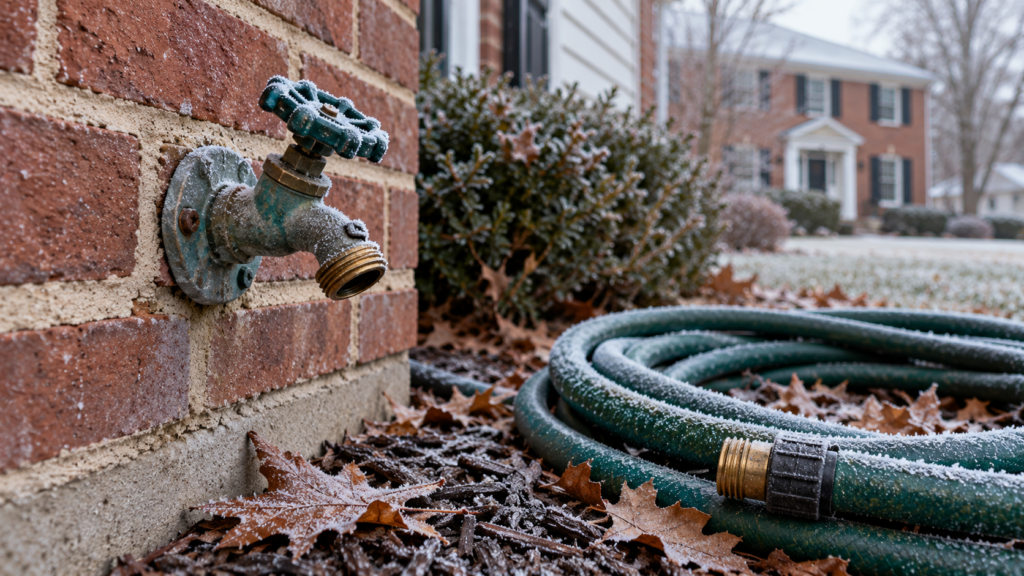
The American Red Cross points to the same few spots every winter:
- Outdoor hose spigots and irrigation lines
- Pipes in unheated spaces: crawlspaces, garages, attics, and unfinished basements
- Pipes inside exterior walls, especially under kitchen and bathroom sinks on an outside wall
- Where the water line enters the house through the foundation
In older Philadelphia-area homes, add one more: pipes that run along the rim joist at the top of the foundation wall. That band of framing sits right against the outdoors with only siding and sheathing in between, which is why it’s also a common place for mold. Cold air that leaks in there can chill any pipe running beside it.
How do I keep my pipes from freezing?
Most of the work happens before the first cold snap. An afternoon in November covers it.
Before the first freeze
- Shut off and drain outdoor spigots. Close the shutoff valve inside the house, then open the outdoor faucet to let the water out. Disconnect and store garden hoses. A hose left attached traps water in the spigot.
- Insulate exposed pipes. Foam pipe sleeves from the hardware store are inexpensive and take minutes to install on pipes in the crawlspace, garage, attic, and unfinished basement. Cover both hot and cold lines.
- Seal the drafts. Caulk or foam gaps where pipes, cables, and dryer vents pass through exterior walls, and around the rim joist. Cold moving air freezes pipes faster than still air.
- Find your main water shutoff now. It’s usually where the water line comes through the foundation, near the meter. Make sure it turns, and make sure everyone in the house knows where it is.
- Close up the garage. If water lines run through it, keep the garage door shut through the winter.
During a cold snap
- Let faucets on outside walls drip. A slow trickle of water keeps it moving and relieves pressure in the line.
- Open the cabinet doors under sinks on exterior walls so warm room air can reach the pipes.
- Keep the thermostat steady day and night. Skip the overnight setback while temperatures are in the teens. The heating bill is far smaller than a water damage bill.
If you’re going away
The Red Cross recommends leaving the heat on and set no lower than 55°F while you’re gone. For longer trips, or for a vacant house you’re selling, it’s worth shutting off the main water and draining the lines. Ask a neighbor to check the house if a deep freeze is forecast.
How can I tell if a pipe is frozen?
The most common sign: you turn on a faucet and get only a trickle, or nothing at all, on a very cold morning. You might also see frost on an exposed pipe, or notice a toilet that won’t refill.
If only one fixture is affected, the frozen section is probably on the line feeding it, often in an exterior wall or under the sink. If nothing in the house has water, the freeze may be where the main line enters the foundation. Check every faucet. Where one pipe has frozen, others nearby often have too.
How do I thaw a frozen pipe safely?
If you can reach the frozen section and there’s no sign of a leak:
- Open the faucet the pipe feeds, so melting water has somewhere to go.
- Warm the pipe gently, starting from the faucet end and working back. A hair dryer, an electric heating pad, or towels soaked in hot water all work.
- Keep going until full water pressure returns, then check the line for drips.
Never use a torch, a propane or kerosene heater, or any open flame. Besides the fire risk, high heat can damage the pipe. If you can’t find the frozen spot, can’t reach it, or can’t get it to thaw, call a licensed plumber.
The most important thing to watch for is water once it thaws. A pipe can split while frozen and only start leaking when the ice melts, so stay close and keep an eye on it.
What should I do if a pipe bursts?
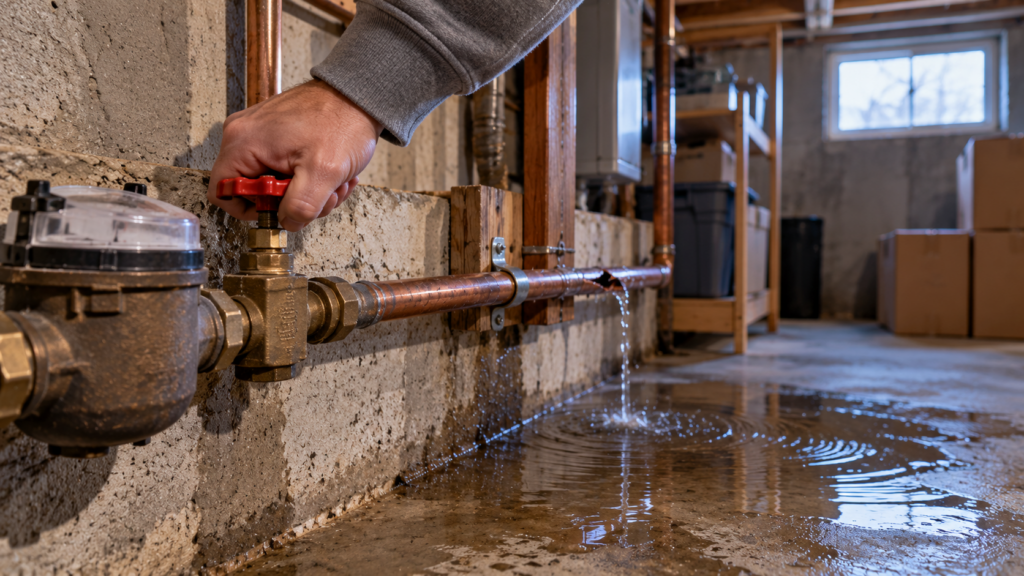
Move fast, but stay calm. The first hour decides how much has to be torn out later.
- Shut off the main water valve. This is why it pays to find it in November.
- Turn off electricity to the wet area if water is near outlets, cords, or the panel, and only if you can reach the breaker without standing in water.
- Open the faucets to drain the water left in the lines.
- Take photos and video of the break and the damage before you move or throw anything out. Your insurance company will ask for them.
- Move belongings off the wet floor and pull up area rugs.
- Call a plumber to fix the pipe and a water damage restoration company to dry the house. They’re two different jobs, and both are urgent.
The second call matters more than most people expect. Water from a burst supply line spreads under flooring and wicks up drywall and framing quickly. Mold can begin growing on wet materials within 24 to 48 hours, and “dry to the touch” isn’t the same as dry. Our post on how long it takes a basement to dry explains why professional drying equipment and moisture readings make the difference.
Water coming in right now? Our 24/7 emergency response team can get started day or night.
Does homeowners insurance cover a burst pipe?
Often, yes, with one big condition. According to the National Association of Insurance Commissioners, homeowners policies generally cover water damage from a “sudden and accidental” discharge from a plumbing system. But policies usually expect you to keep the home heated to a reasonable temperature, or to shut off and drain the water if the house is vacant. If the insurer decides a pipe froze because of neglect, the claim may be denied.
A few things help your claim:
- Keep the heat on. A steady thermostat and a utility bill that shows it are your best evidence.
- Document everything before cleanup starts: the break, the water, and damaged belongings.
- Call your insurer promptly and keep a record of who you spoke with.
- Start drying right away. Most policies expect you to prevent further damage, and waiting can let a covered water loss turn into a mold problem.
Keep in mind that coverage usually pays for the water damage, not for repairing the pipe itself, and every policy is different. Check yours, or ask your agent, before the cold sets in. We work directly with all insurance companies, and our insurance page explains how the process works with us. For more winter prep tips, the Insurance Institute for Business & Home Safety publishes a free Winter Ready guide.
How Pro Home Restorations handles burst-pipe water damage
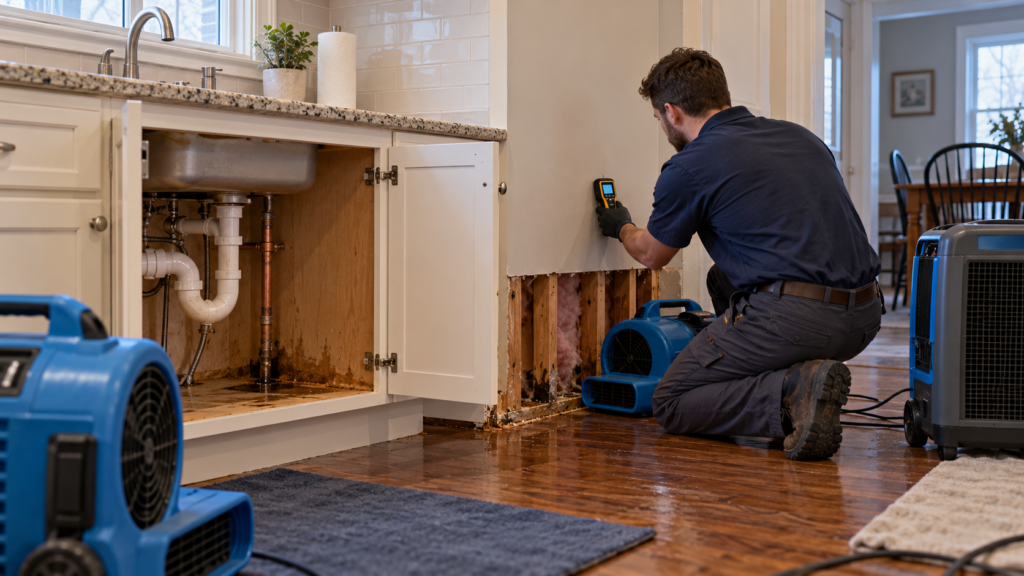
Once the plumber has stopped the leak, our IICRC-certified team takes it from there:
- Inspection and moisture mapping. We use moisture meters to find how far the water traveled, including inside walls, under flooring, and into the ceiling below.
- Water removal and tear-out. We extract standing water and remove materials that can’t be saved, like soaked carpet pad and the bottom of wet drywall.
- Structural drying. Commercial air movers and dehumidifiers run around the clock, and we check readings daily until the structure is truly dry.
- Repairs. Our property restoration team puts the room back together.
Learn more about our water damage restoration services. Estimates are always free, and our work comes with a 3-year transferable warranty.
What areas do you serve?
Pro Home Restorations serves Philadelphia and Delaware, Montgomery, Bucks, Chester, and Berks counties.
Pipe burst or water where it shouldn’t be?
Shut off the main water, then call us at (484) 948-7710, available 24/7, or request your free evaluation online.