
Whether it came from a heavy storm, a failed sump pump, or a burst pipe, water in the basement leaves homeowners with the same question once the floor is clear: how long until it’s actually dry? The honest answer is that it depends on a few things you can see and a few you can’t.
Here’s what to expect, what speeds drying up, and why “dry to the touch” isn’t the finish line.
How long does it take a basement to dry?
With professional extraction and drying equipment, most basements reach their drying goals in about three to five days. That’s after the standing water is removed and the right equipment is running around the clock.
Without professional equipment, the timeline stretches. Household fans and a single dehumidifier can take weeks to dry the structure, and in a closed-up basement with high humidity, some materials may never fully dry on their own. That’s where the real trouble starts.
What affects how long drying takes?
No two water losses dry on the same schedule. The biggest factors are:
- How fast drying starts. Water keeps wicking into drywall, framing, and insulation for as long as it sits. The first day matters more than any other.
- How much water, and how long it sat. An inch of water caught the same morning is a very different job than water that sat over a weekend.
- What got wet. Concrete, block walls, and wood framing hold moisture longer than surfaces suggest. Carpet pad and drywall soak up water quickly and often can’t be saved.
- Basement conditions. Cool temperatures, high humidity, and little airflow all slow evaporation. Below-grade spaces in our area are usually all three.
- The type of water. Clean water from a supply line is handled differently than groundwater or sewage backup, which can require removing more materials before drying even begins.
Why “dry to the touch” isn’t really dry
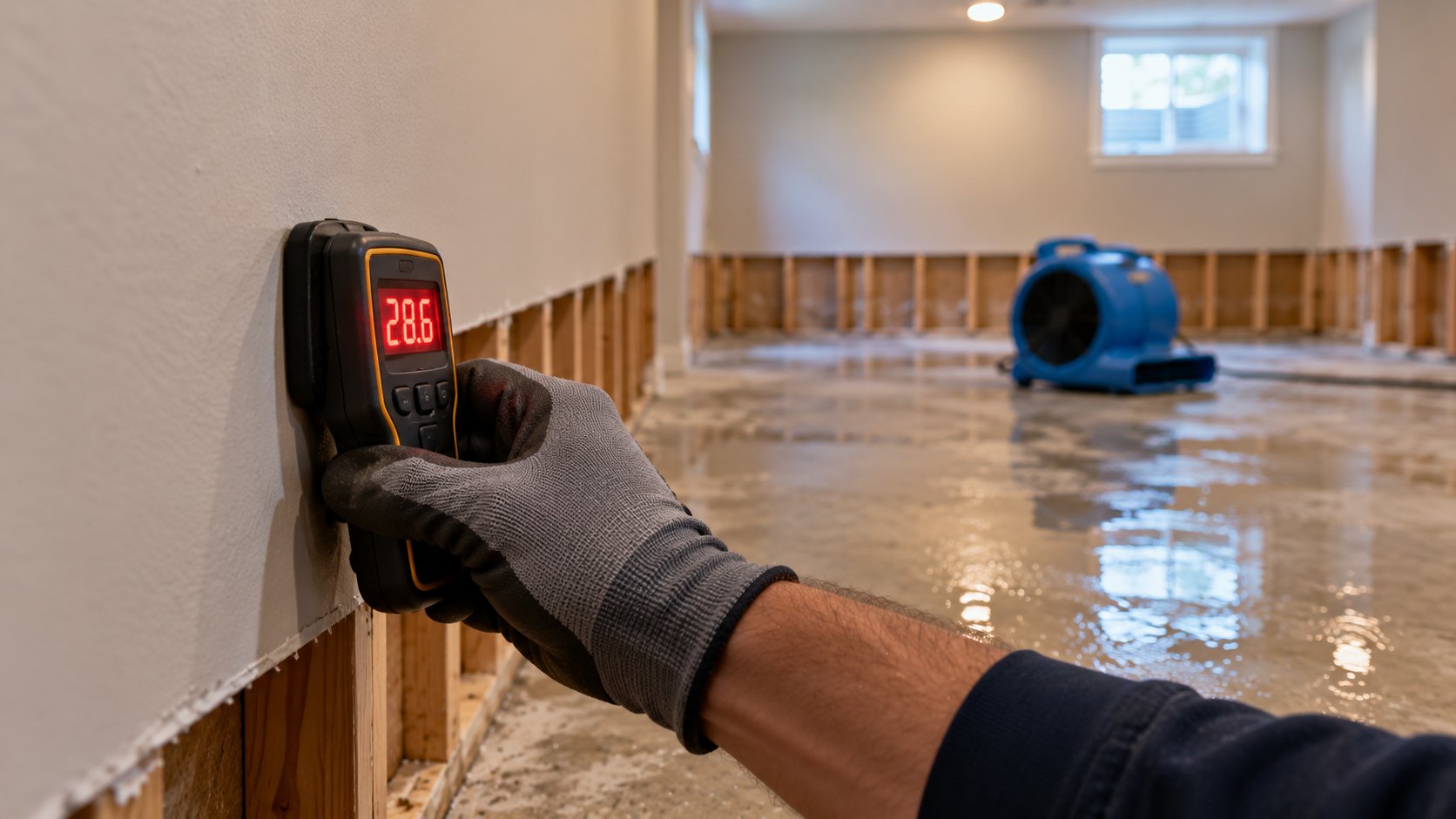
A floor or wall can feel dry within a day or two while the material underneath is still holding water. Moisture hides in the bottom of drywall, inside wall cavities, in wood framing, and deep in concrete slabs and block walls.
That trapped moisture is what leads to musty smells, peeling paint, and mold growth weeks later. Mold can begin growing within 24 to 48 hours on materials that stay wet, which is why professionals don’t call a job finished based on how it feels. We use moisture meters to check readings until materials return to normal levels for that material, not just until the surface looks fine.
What should I do in the first 24 hours?
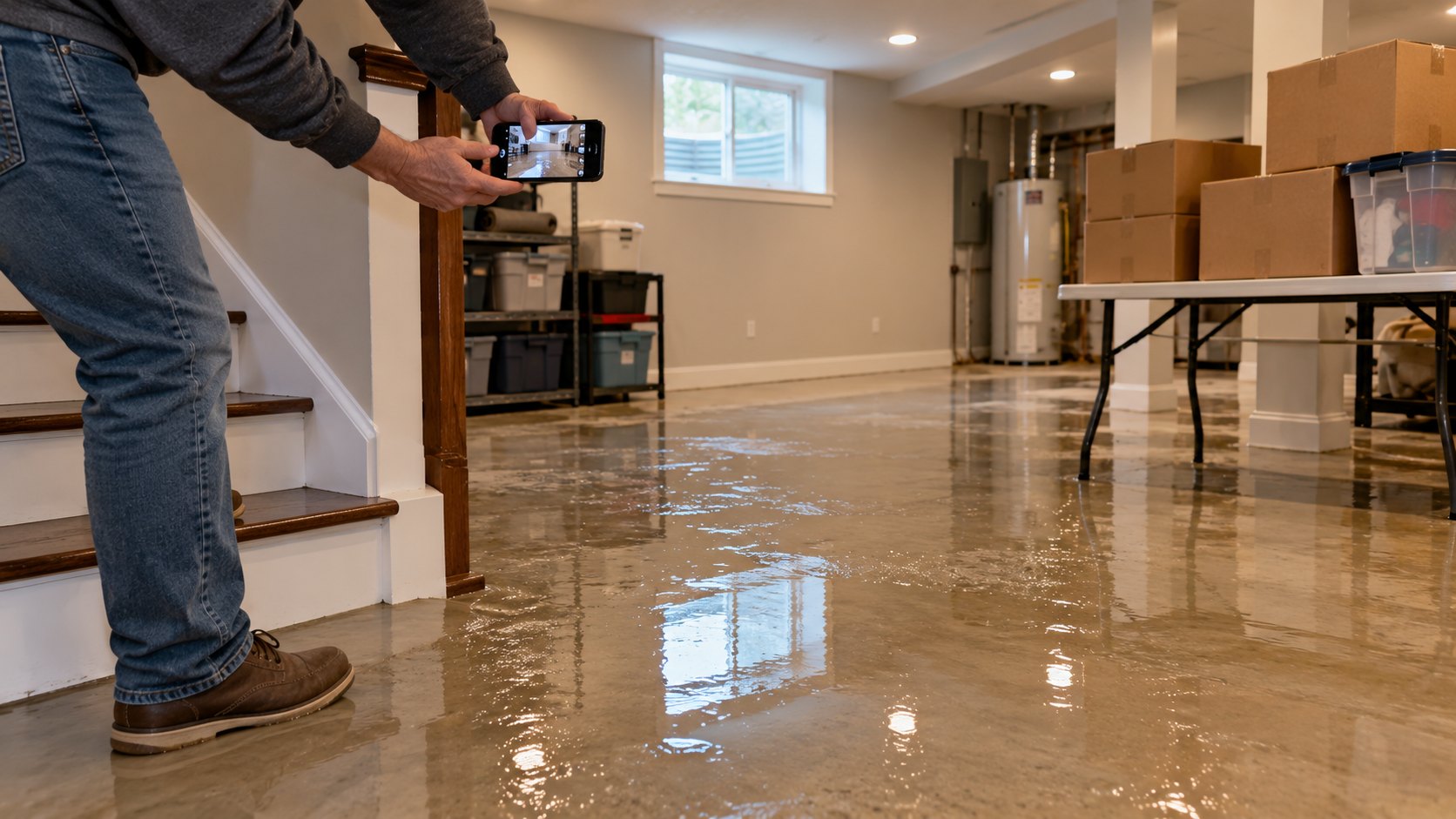
If it’s safe to do so:
- Stop the source of the water if you can, and keep power off in any wet area until it’s safe.
- Move belongings, boxes, and furniture off the wet floor and out of the area.
- Take photos and video of the water and the damage before anything is thrown out. Your insurance company will want them.
- Pull up area rugs and get air moving, but don’t run a central heating or cooling system if water reached the ductwork.
- Call a professional restoration company as early as possible. The sooner drying starts, the less has to be torn out.
Water coming in right now? Our 24/7 emergency response team can get started day or night.
Can I dry out a basement myself?
A small spill on a bare concrete floor can usually be handled with a wet vacuum, fans, and a dehumidifier. Larger losses are a different story, especially when water reached finished walls, carpet, or insulation.
Professional drying uses commercial air movers and dehumidifiers that remove far more water than household units, plus moisture detection tools that find water you can’t see. If you’re not sure whether water is hiding behind your walls, our post on the signs of hidden water damage is a good place to start.
Will my homeowners insurance cover the drying?
It depends on the cause and your policy. Sudden and accidental events, like a burst pipe, are often covered, while gradual leaks and some types of flooding may not be. Document everything and contact your insurer promptly. We work directly with all insurance companies, and our insurance page explains how the process works.
How Pro Home Restorations dries a wet basement
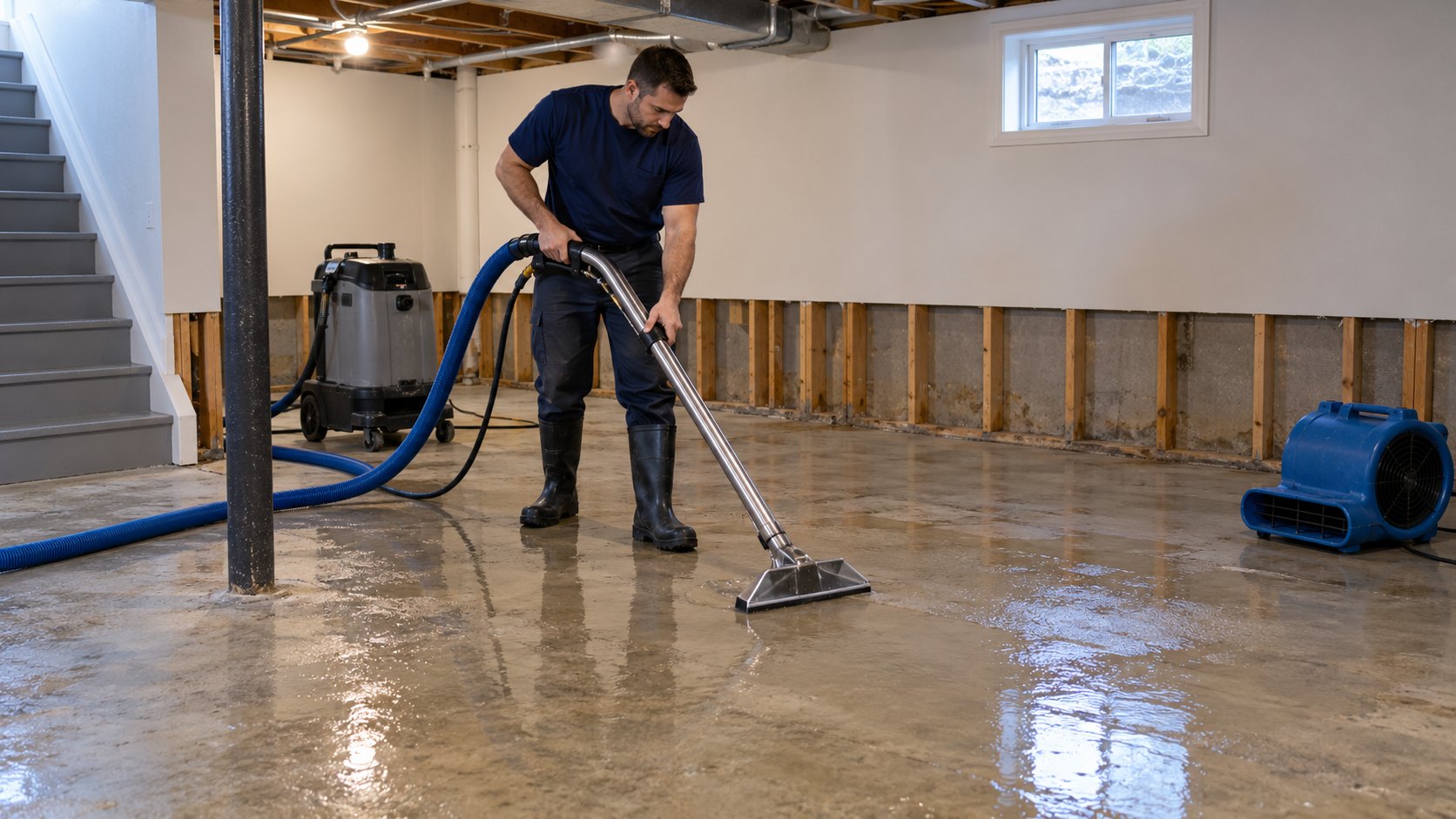
Our IICRC-certified team handles the job from the first call through the final repair:
- Inspection and moisture mapping. We find the source and use moisture meters to map how far the water traveled, including inside walls and floors.
- Water removal and tear-out. We extract standing water and remove materials that can’t be saved, like soaked carpet pad and the bottom of wet drywall.
- Structural drying. Commercial air movers and dehumidifiers run around the clock, and we check readings daily until the structure is truly dry.
- Repairs. Once everything is dry, our property restoration team puts the basement back together.
Learn more about our water damage restoration services. Our work comes with a 3-year transferable warranty, and estimates are always free.
What areas do you serve?
Pro Home Restorations serves Philadelphia and Delaware, Montgomery, Bucks, Chester, and Berks counties.
Dealing with a wet basement?
Don’t wait for it to dry on its own. Call (484) 948-7710, available 24/7, or request your free evaluation online.