
Grab a flashlight, head to the basement, and look up where the ceiling meets the top of the foundation wall. That band of wood running around the edge of the house is your rim joist. In a lot of Philadelphia-area basements, it’s also where homeowners first find dark spots, fuzzy patches, or a musty smell they can’t place. Once the heat comes on in the fall, it’s one of the most common places for mold to show up.
Here’s how to tell what you’re looking at, why it happens there, and what actually keeps it from coming back.
What is a rim joist?
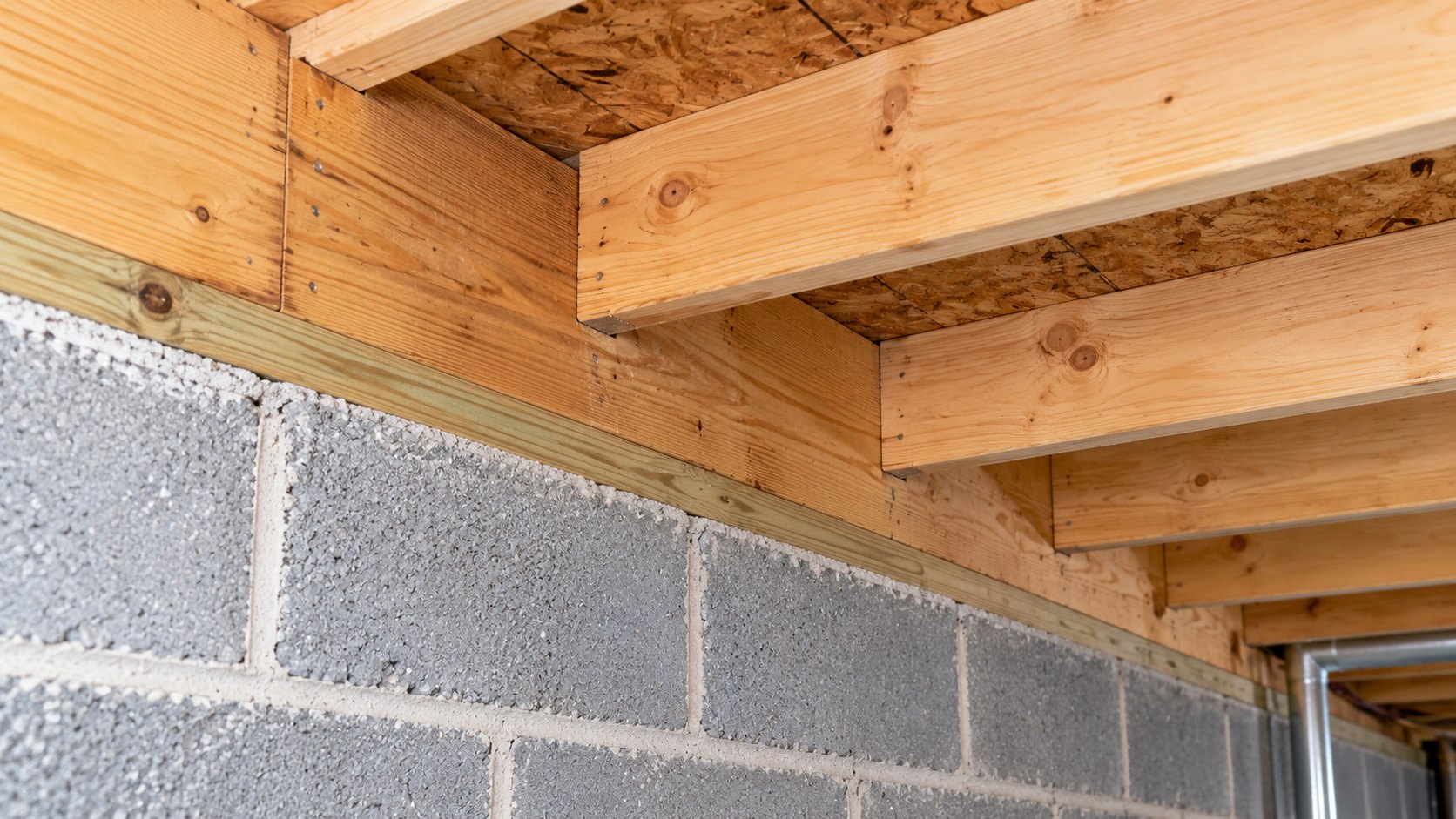
The rim joist (sometimes called a band joist) is the board that caps the ends of your floor joists and runs along the perimeter of the house, sitting on top of the foundation wall. On one side is your heated basement. On the other side, separated by only siding and sheathing, is the outdoors. That position is exactly why it’s prone to moisture.
Why does mold grow on rim joists?
Mold needs moisture, and the rim joist gets it from both directions:
- Condensation from inside. When the heat is on, warm indoor air carrying moisture from showers, cooking, laundry, and a damp basement reaches the cold rim joist and condenses on the wood. Loose fiberglass batts stuffed into the joist bays don’t stop that air. They often trap the moisture against the wood instead.
- Water from outside. Overflowing gutters, downspouts that dump next to the foundation, soil that slopes toward the house, and a deck attached without proper flashing can all send water to the top of the foundation wall. (See our gutter cleaning service.)
- Basement humidity. A basement that stays damp all summer gives mold a head start before fall even arrives.
How can I tell if it’s mold or just staining?
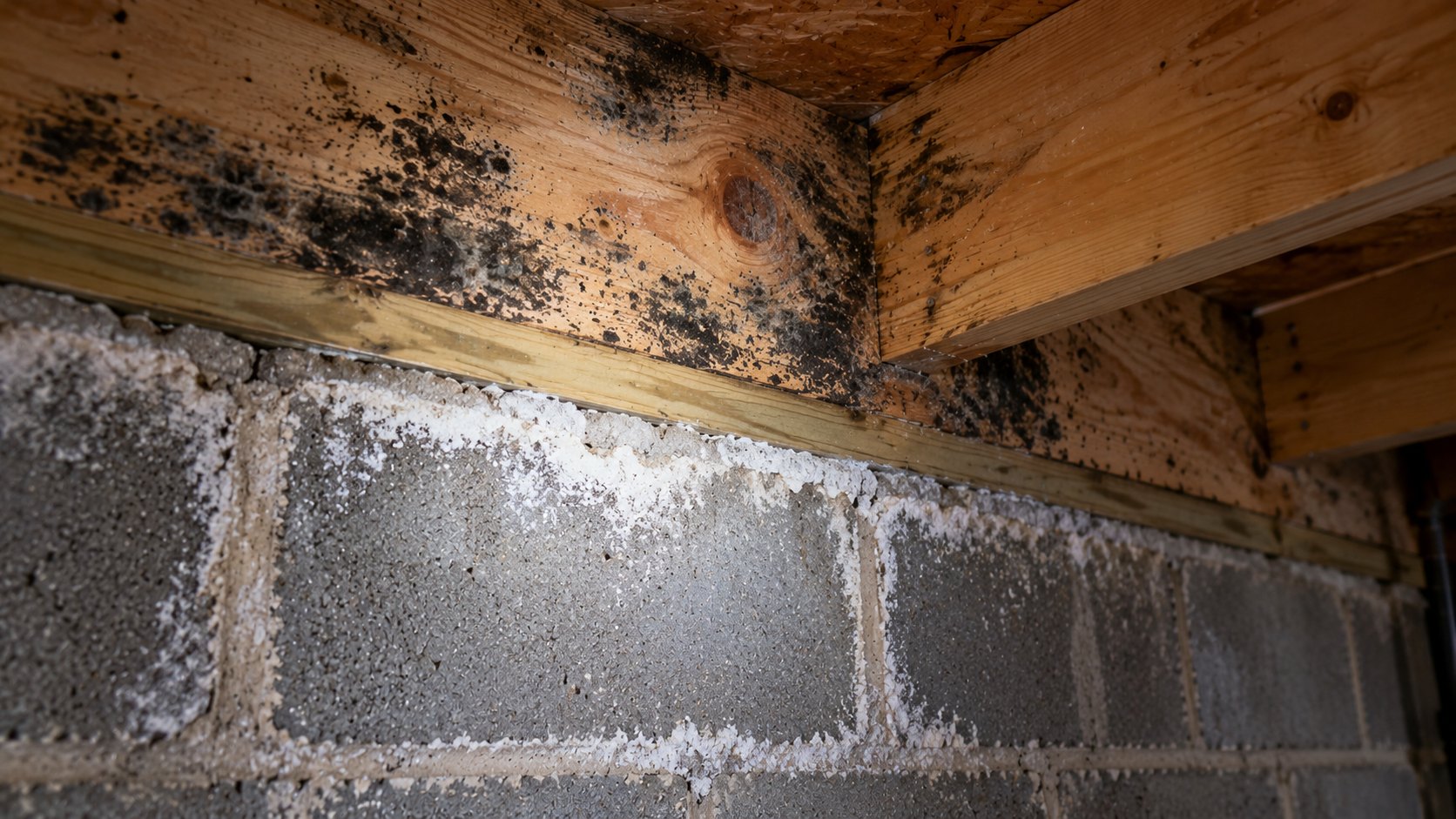
You can’t confirm mold by looking alone, but some signs point strongly one way or the other:
- Likely mold: fuzzy or spotty patches, growth in clusters rather than an even stain, colors from black and green to white, and a musty smell that’s stronger close to the wood.
- Likely old staining: a flat, even discoloration with no texture and no smell. It may be from a past leak that has since dried, though it’s still worth finding out why the wood got wet.
- White crust on the concrete or block below: usually efflorescence, mineral deposits left behind as water moves through masonry. It isn’t mold, but it means water is getting in.
Look, but don’t scrape or brush the area. Disturbing mold sends spores into the air and spreads them through the basement.
What if the wood feels soft?
Press a screwdriver gently into the wood. Sound wood resists. If the tip sinks in easily, or the wood is crumbling, splitting, or darker and damp to the touch, the moisture has been there long enough to start rotting it. The rim joist helps carry the wall above it, so soft or rotted wood is no longer just a cleaning job. It needs a professional evaluation, and possibly a repair.
Can I clean rim joist mold myself?
The EPA’s general guidance is that a homeowner can usually handle a moldy area smaller than about 10 square feet, roughly a 3-by-3-foot patch. The catch with rim joists is that they run the whole perimeter of the house, so a few spots in one corner often turn out to be many spots around the basement once the insulation comes down. Those add up quickly.
If the area is small and the wood is solid, wear gloves and an N-95 mask, clean the surface, and dry it completely. Then fix the moisture source, or the mold will be back next season. Our post Can You Paint Over Mold? covers why covering it up doesn’t work and when to call a professional.
How do I keep mold off the rim joist for good?
Cleaning only treats the result. Keeping the rim joist dry is what prevents a repeat:
- Stop outside water first. Clean gutters, extend downspouts away from the house, and make sure the soil slopes away from the foundation.
- Control basement humidity. A dehumidifier and an inexpensive humidity meter will tell you where the basement stands and help keep it in a healthy range.
- Fix the insulation the right way. Loose fiberglass batts are a common culprit. Once the area has been cleaned and is fully dry, a properly sealed insulation approach keeps warm, moist air from reaching the cold wood. Our team can tell you what makes sense for your house.
Is rim joist mold a problem when buying or selling a home?
It can be. Home inspectors routinely shine a flashlight along the rim joist, and mold or soft wood there often shows up in the inspection report. If you’re selling, it’s far easier to handle it before listing than in the middle of negotiations. Pro Home Restorations works with real estate agents, lenders, and property managers across the area and understands that settlement dates don’t wait. (More in our FAQs.)
How does Pro Home Restorations handle rim joist mold?
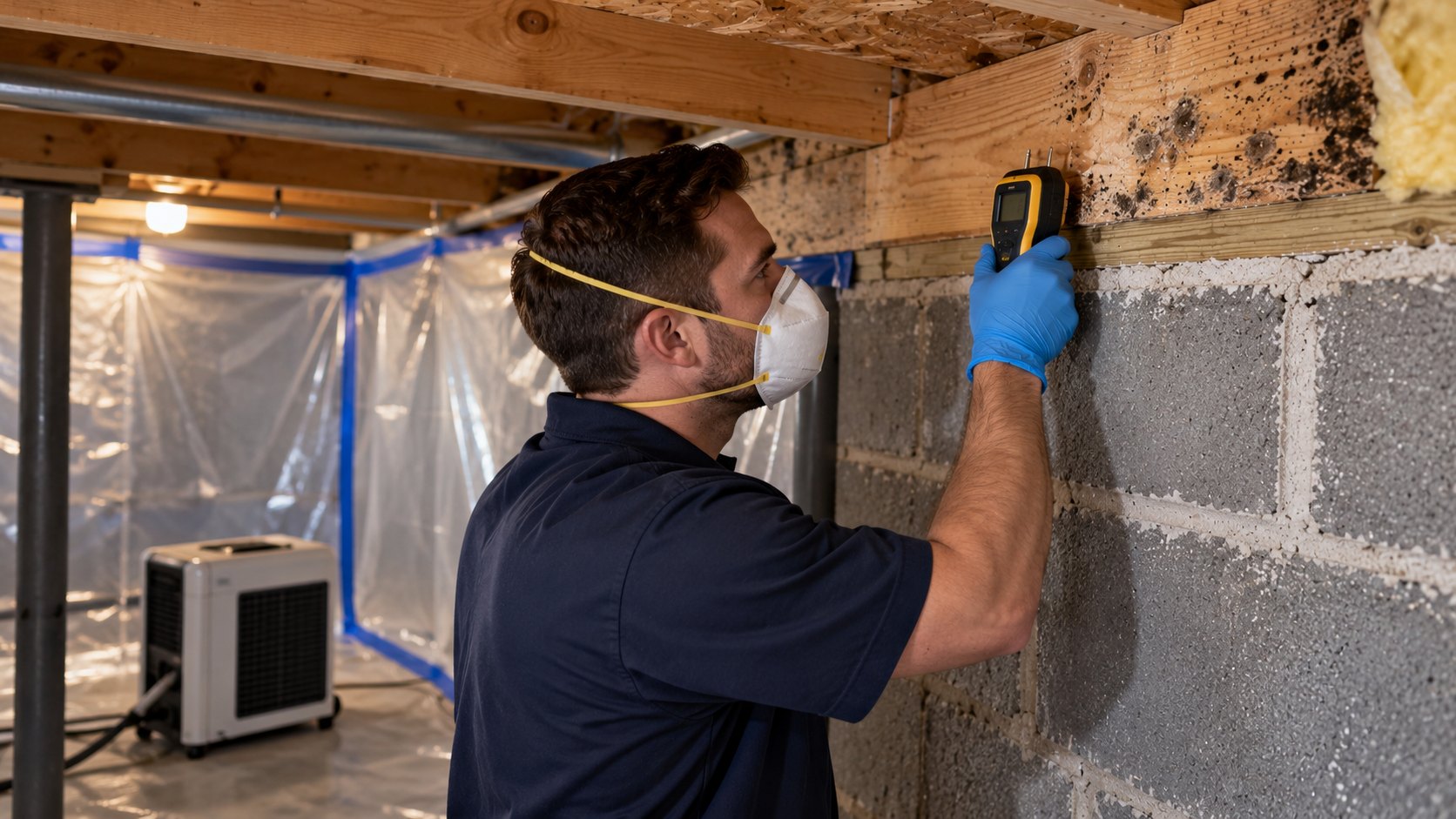
Our IICRC-certified team treats the cause, not just the spots:
- Inspection and moisture detection. We find where the moisture is coming from and check how far the mold has spread around the perimeter.
- Containment and air filtration. Barriers and filtration keep spores from spreading through the basement while we work.
- Removal and treatment. Affected materials are cleaned or removed, and the area is dried properly. If rotted wood needs to be replaced, our property restoration team handles the repair.
- Prevention. We explain what caused it and what will keep it from coming back.
If the mold followed a leak or flood, time matters. Mold can begin growing within 24 to 48 hours after materials get wet. Learn more about our Mold Testing & Remediation services, or see a full project in our case study.
What areas do you serve?
Pro Home Restorations serves Philadelphia and Delaware, Montgomery, Bucks, Chester, and Berks counties.
Found something on your rim joist?
Let us take a look. Inspections are free, and our work comes with a 3-year transferable warranty. Call (484) 948-7710, available 24/7, or request your free evaluation online.