
Every winter in the Philadelphia suburbs there’s a stretch where a snowstorm is followed by a few sunny days and cold nights. That’s when icicles start hanging off the gutters, and when we start getting calls about brown stains spreading across ceilings near the outside walls. In a lot of those homes, the culprit is an ice dam.
Ice dams look harmless from the driveway, but they can push water under your shingles and into your attic, walls, and ceilings. Here’s what causes them, how to prevent them before the snow flies, and what to do if water is already getting in.
What is an ice dam?
An ice dam is a ridge of ice that builds up along the lower edge of a roof. Snow higher up the roof melts, the water runs down toward the edge, and it refreezes when it reaches the colder eaves. As the ridge grows, more meltwater pools behind it with nowhere to go. That standing water works its way up and under the shingles, then drips into the attic and down into the house.
What causes ice dams?
The short answer is heat in the wrong place. When warm air from your living space leaks into the attic, it heats the underside of the roof and melts the snow from below, even when it’s well below freezing outside. The eaves hang out past the warm part of the house, so they stay cold, and that’s where the water refreezes.
The most common sources of that attic heat:
- Air leaks into the attic around recessed lights, the attic hatch or pull-down stairs, plumbing vents, chimneys, and wiring holes
- Thin or uneven insulation, especially where the roof meets the outside walls
- Poor attic ventilation, including soffit vents blocked by insulation
- Heat sources in the attic, like ductwork that isn’t sealed or insulated, or bathroom fans that vent into the attic instead of outside
Do clogged gutters cause ice dams?
They don’t cause them on their own, but they make them worse. A gutter packed with wet leaves freezes solid and gives the ice a head start right at the roof edge. Ice-filled gutters also get heavy, which pulls on the fascia boards they’re attached to.
That’s why a final gutter cleaning after the last leaves come down in late fall is worth doing. It won’t fix an attic heat problem, but it removes one of the things that helps ice build up. If your gutters haven’t been done since the leaves dropped, our guide on how often to clean your gutters explains the timing, and our team offers gutter cleaning across the area.
How do I prevent ice dams?
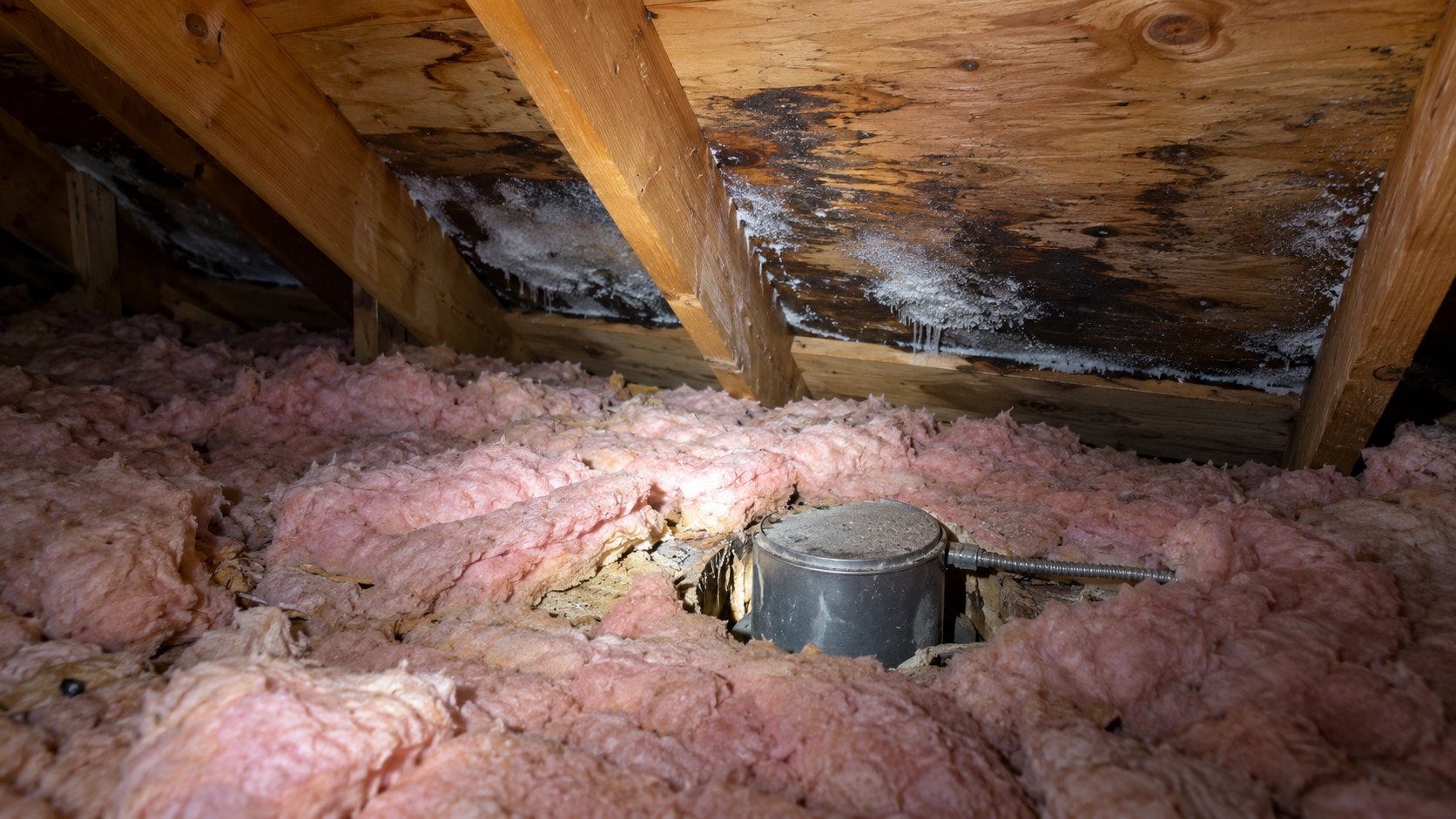
The lasting fix is to keep the roof deck cold so snow melts evenly instead of melting underneath. In order of importance:
- Seal attic air leaks. This does more than anything else. Gaps around light fixtures, the attic hatch, plumbing and wiring penetrations, and the chimney let warm, moist air straight into the attic. Weatherstrip and insulate the hatch, and seal the gaps.
- Add insulation where it’s thin. Insulation works best once the air leaks are sealed. Pay attention to the area near the eaves, where it’s often thinnest.
- Keep the attic ventilated. Soffit vents at the eaves and vents at or near the ridge let cold outside air move under the roof. Make sure insulation isn’t blocking the soffit vents.
- Vent fans outside. Bathroom and kitchen exhaust fans should run all the way through the roof or wall, not dump warm, humid air into the attic.
- Clean the gutters after the leaves are down, as above.
Sealing an attic properly can be a tough, dusty job, and in older homes it’s easy to miss the biggest leaks. If you’re not sure where yours are, a professional evaluation is a good place to start.
What should I do after a big snowstorm?
- Rake the lower roof. A roof rake with a long handle lets you pull the snow off the first few feet of the roof from the ground. Less snow at the edge means less meltwater to refreeze.
- Stay off the roof. Climbing onto a snowy or icy roof is dangerous. If the roof is steep or you can’t reach it safely from the ground, leave it to a professional.
- Don’t chip at the ice. Hammers, axes, and shovels damage shingles and gutters, which gives water an even easier way in.
- Watch the ceilings. Check upstairs ceilings and the tops of exterior walls for new stains, especially as temperatures rise after a cold snap.
Heat cables along the roof edge can help in a trouble spot, but they treat the symptom. If ice dams form at the same spot every winter, the cause is almost always in the attic above it.
What are the signs of ice dam damage inside the house?
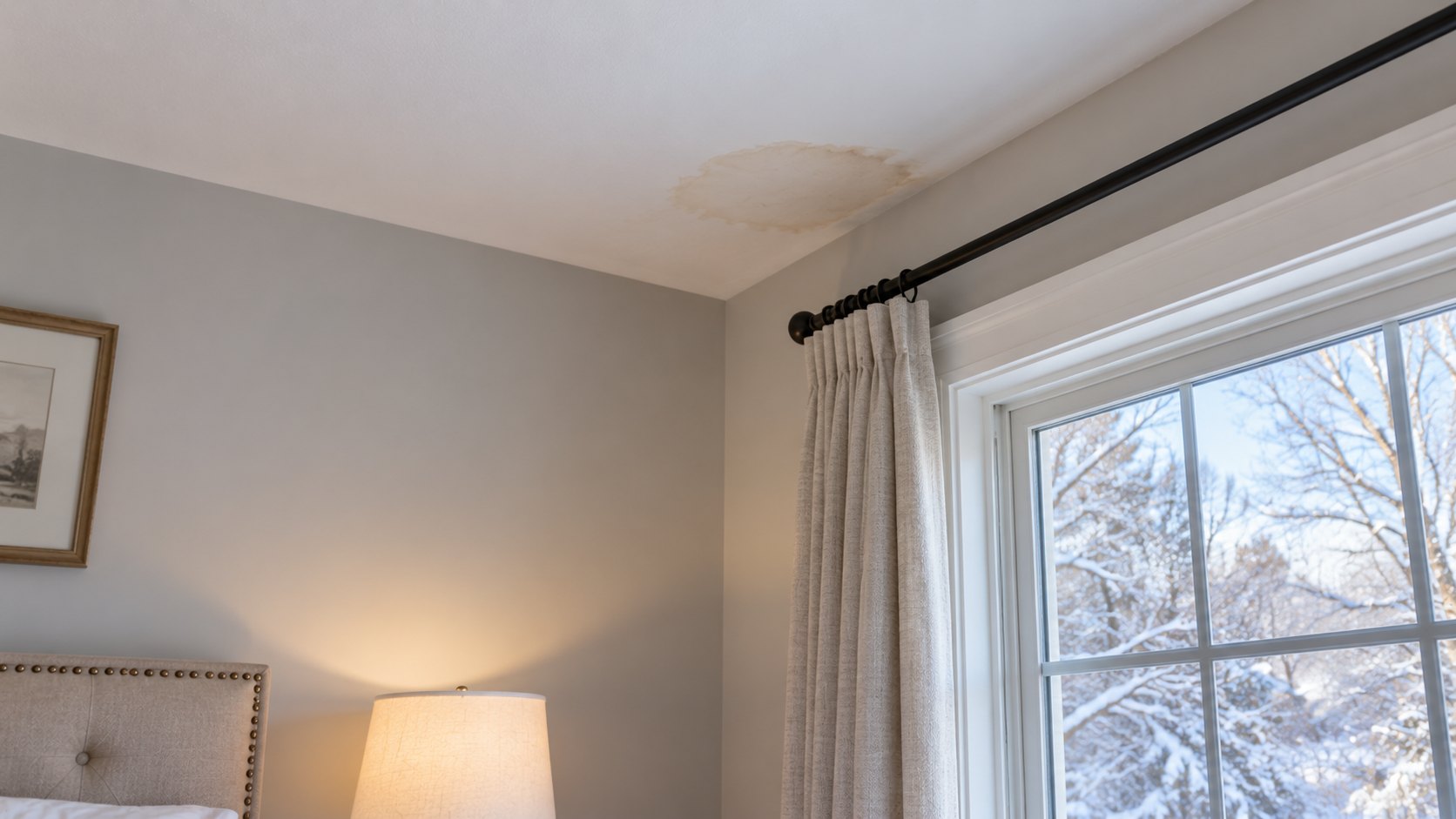
Water from an ice dam usually shows up near the outside edges of the house, often weeks before anyone connects it to the roof:
- Brown or yellow stains on ceilings near exterior walls
- Peeling paint or bubbling drywall at the top of an outside wall
- Damp, matted, or frosty insulation in the attic near the eaves
- Water dripping around window frames on upper floors
- A musty smell in upstairs rooms or the attic
Wet attic insulation and roof sheathing don’t dry well in winter, and that’s how an ice dam turns into attic mold. Mold can begin growing within 24 to 48 hours on materials that stay wet. Our guide to the signs of hidden water damage covers more of what to look for.
Does homeowners insurance cover ice dam damage?
Many policies cover the interior water damage an ice dam causes, like stained ceilings and soaked insulation. Removing the ice itself, or fixing the attic problem that caused it, usually falls on the homeowner. Coverage depends on your policy, so take photos of the ice and any damage inside, and call your insurer promptly. We work directly with all insurance companies, and our insurance page explains how the process works.
How Pro Home Restorations handles ice dam water damage
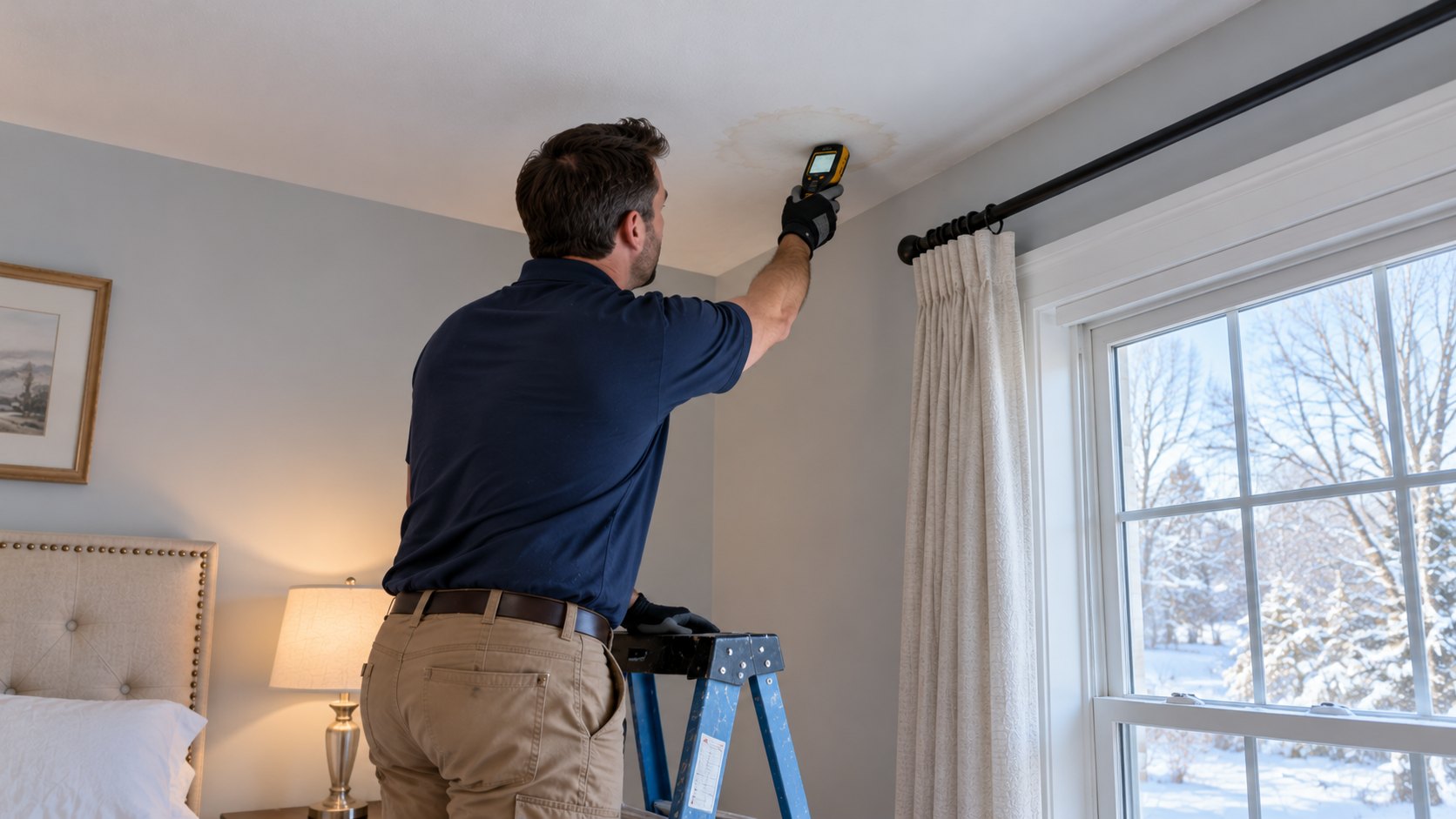
Our IICRC-certified team handles the inside of the house once water has gotten in:
- Inspection and moisture mapping. We use moisture meters to find how far the water traveled through the ceiling, walls, and attic insulation.
- Removal and drying. We remove wet insulation and materials that can’t be saved, then dry the structure with commercial equipment and check readings until it’s truly dry.
- Mold remediation, if growth has already started in the attic or wall cavities. Learn more about our Mold Testing & Remediation services.
- Repairs. Our property restoration team replaces drywall and puts the room back together.
See our water damage restoration services for more. Our work comes with a 3-year transferable warranty, and inspections are always free. Getting the house ready for winter? Our post on keeping your pipes from freezing covers the other big cold-weather risk.
What areas do you serve?
Pro Home Restorations serves Philadelphia and Delaware, Montgomery, Bucks, Chester, and Berks counties.
Seeing stains after the snow?
Let us take a look before it spreads. Call (484) 948-7710, available 24/7, or request your free evaluation online.