
July in southeastern Pennsylvania means heavy afternoon thunderstorms, and for a lot of homeowners in the Philadelphia suburbs, the sump pump is the only thing standing between those storms and a wet basement. When the pump quits mid-storm, the first question we hear after “how bad is it?” is almost always “will my insurance cover this?”
The honest answer is that it depends on your policy, and many homeowners are surprised by what theirs says. Here’s how coverage for sump pump failures often works, what you can do now to protect yourself, and what to do if your basement is already wet. We’re a restoration company, not an insurance agent, so treat this as a general guide and confirm the details with your own agent or insurer.
Does a standard homeowners policy cover sump pump failure?
Often, no, at least not on its own. Many standard homeowners policies exclude damage from water that backs up through drains or overflows from a sump pump or sump pit. That exclusion usually applies whether the pump burned out, lost power, or simply couldn’t keep up with the rain.
That surprises people, because the same policy may cover water damage from a burst pipe or a failed washing machine hose. Insurers tend to treat sudden, accidental water from inside your plumbing differently from water that comes up from below. Your policy’s wording decides which category your loss falls into, so read the water damage and exclusions sections carefully, or ask your agent to walk you through them.
What is a water backup endorsement?

A water backup endorsement (sometimes called “water backup and sump discharge or overflow” coverage) is an add-on many insurers offer for an extra premium. It’s designed for exactly this situation: water that backs up through sewers or drains, or overflows from a sump pump that fails.
A few things to know:
- It usually has its own limit. Endorsements are often capped at a set amount, and a finished basement can exceed a low limit quickly.
- It may carry its own deductible.
- It typically covers the damage, not the pump. Repairing or replacing the pump itself is usually treated as maintenance.
If you have a finished basement or store anything valuable downstairs, it’s worth asking your agent what the endorsement costs and what limits are available. Many homeowners don’t know whether they have it until they need it.
Does flood insurance cover a failed sump pump?
Flood insurance is a separate policy, usually written through FEMA’s National Flood Insurance Program or a private insurer, and it isn’t part of a standard homeowners policy. It covers flooding in a specific sense: surface water from outside that covers normally dry land, generally affecting more than just your property.
So if a creek overflows and water pours into your basement, flood insurance may apply. If your pump fails during an ordinary storm and the pit overflows, that’s usually a water backup question instead. Flood policies also limit what they cover in basements. FEMA has a helpful summary of what flood insurance covers in a basement.
Is the sump pump itself covered?
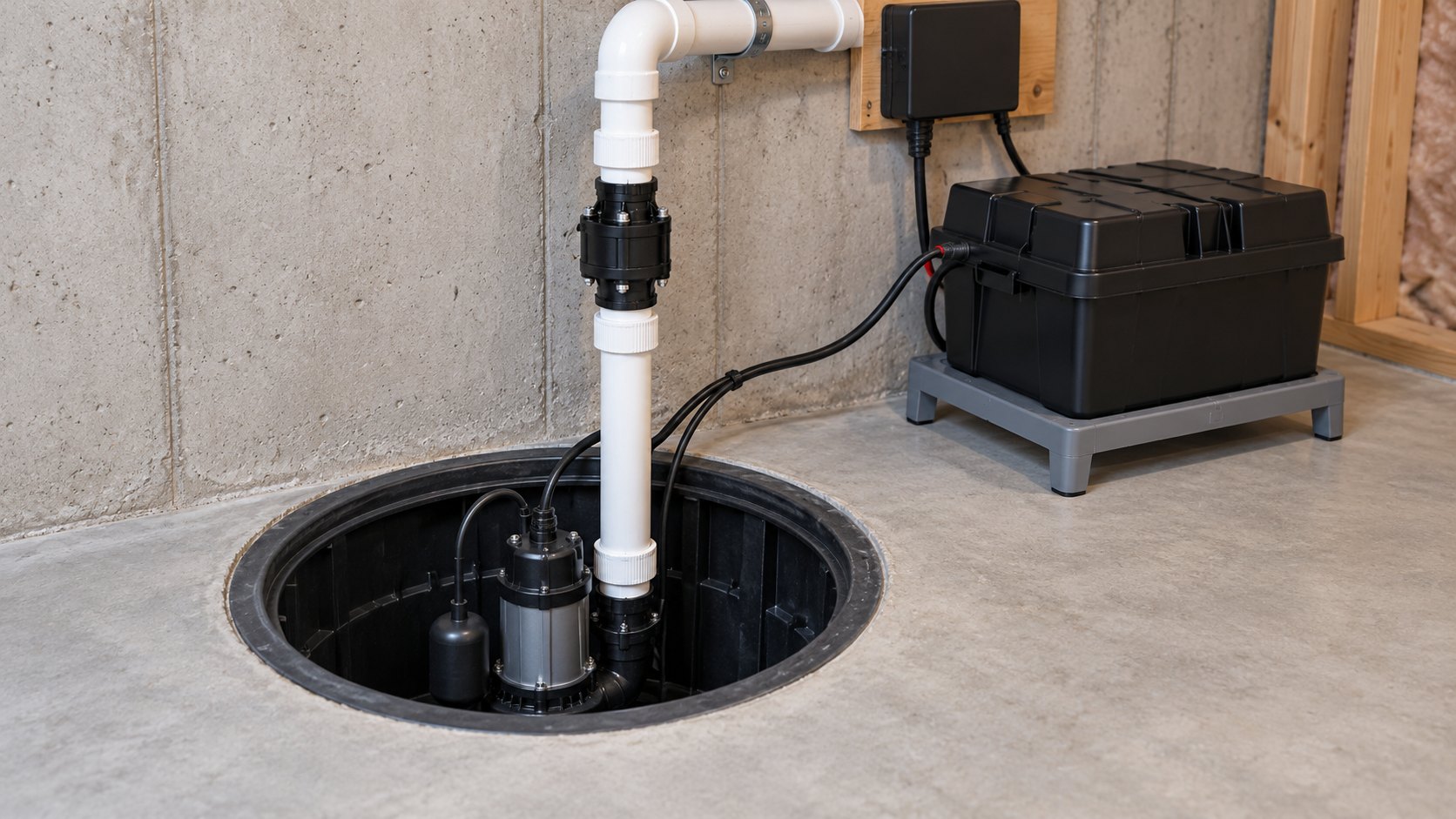
Usually not. Pumps wear out, and most policies treat replacing a worn-out pump as homeowner maintenance. Even with a water backup endorsement, coverage is generally for the damage the water caused, not the equipment that failed.
That’s one more reason to test the pump before storm season, keep the discharge line clear, and replace an aging pump before it quits. Our team installs and repairs sump pumps, including battery backup systems that keep running when a storm knocks the power out.
What can I do now to protect myself?

A few minutes this week can save a lot of trouble later:
- Read your policy, or call your agent and ask, “Am I covered if my sump pump fails or overflows?” Get the answer in writing if you can.
- Ask about a water backup endorsement and its limit if you don’t already have one.
- Test your pump. Pour a bucket of water into the pit and make sure it turns on, empties the pit, and shuts off cleanly.
- Add a battery backup if you don’t have one. Summer storms and power outages tend to arrive together.
- Document your basement. Photos or a short video of finished areas and stored belongings make any future claim easier.
What should I do if my sump pump fails and the basement floods?
Stay out of standing water if outlets, cords, or appliances are in it, and only shut off power to the basement at the breaker if you can reach it from a dry spot. Then take photos and video before you move anything, call your insurer to report the loss, and get drying started quickly. Wet drywall, carpet, and insulation can start growing mold within 24 to 48 hours, and waiting on a coverage decision doesn’t stop that clock. Our post on how long it takes a basement to dry explains what the drying process looks like.
How Pro Home Restorations handles sump pump flooding
Our IICRC-certified team responds 24/7:
- Inspection and documentation. We map the moisture with meters and photograph the damage for your claim.
- Water extraction and drying. We remove the water, take out materials that can’t be saved, and dry the structure with commercial equipment until the readings confirm it’s dry.
- Mold remediation, if growth has started. Learn more about our Mold Testing & Remediation services.
- Repairs and prevention. Our property restoration team rebuilds what was lost, and we can repair or replace the pump and add a battery backup so it doesn’t happen again.
We work with your adjuster throughout the process. Our insurance page explains how that works, and our water damage restoration page has more on what we do. Our work comes with a 3-year transferable warranty, and inspections are always free.
What areas do you serve?
Pro Home Restorations serves Philadelphia and Delaware, Montgomery, Bucks, Chester, and Berks counties.
Did your sump pump give out?
Let’s get you dry and get you answers. Call (484) 948-7710, available 24/7, or request your free evaluation online.