
Plenty of homeowners in the Philadelphia suburbs notice the same thing every July: the basement that seemed fine all winter suddenly smells damp and stale. Sometimes it’s mild, just a “basement smell.” Sometimes it hits you the moment you open the door.
That smell is worth paying attention to. A musty odor usually means mold or mildew is growing somewhere, even if you can’t see it yet. The good news is that summer basement odors are often caught early, when the fix is still simple. Here’s why it happens, how to find the source, and what actually keeps it away.
Why does my basement only smell musty in the summer?
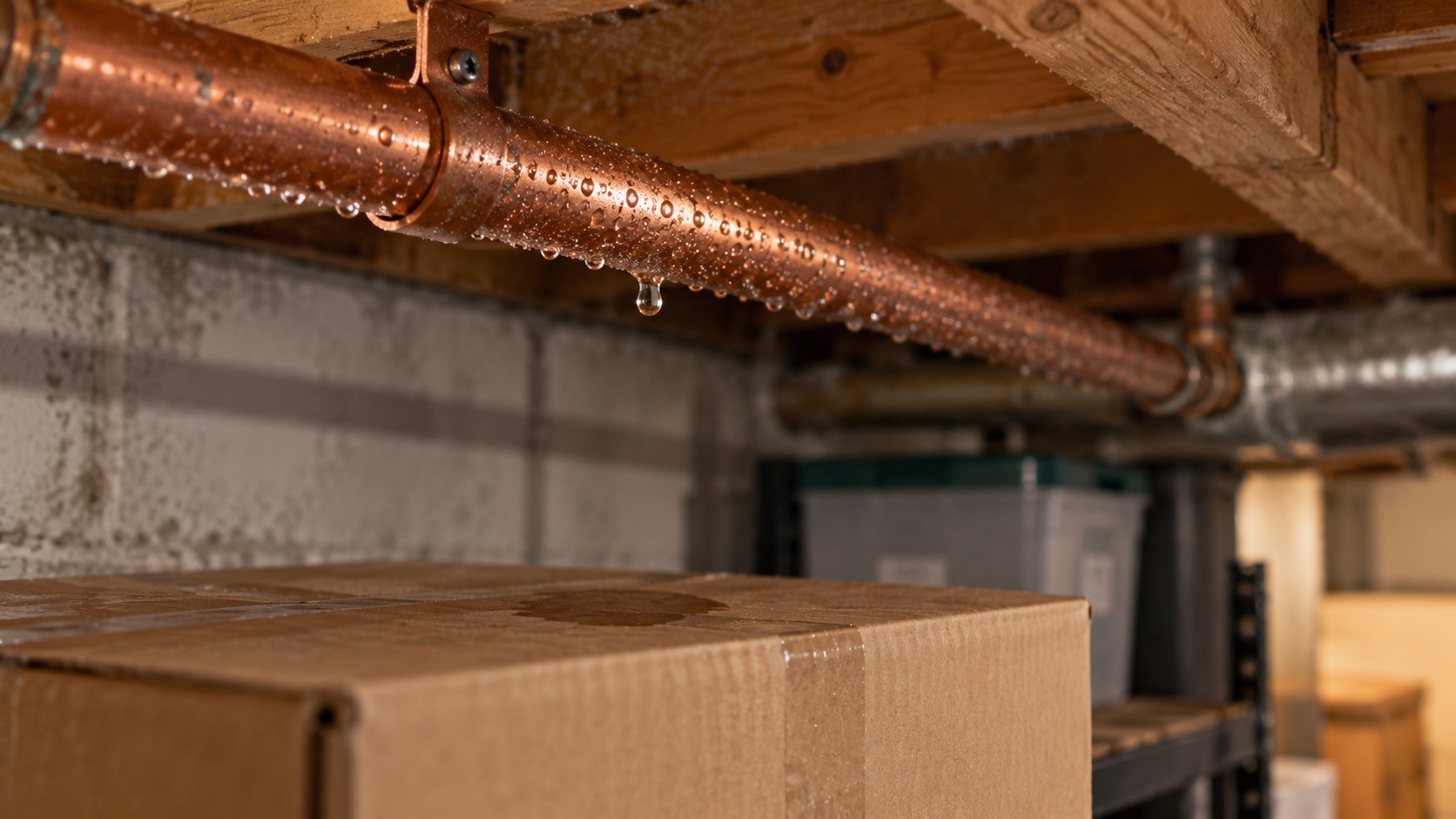
It comes down to humidity and temperature. Southeastern Pennsylvania summers are hot and humid, while basements stay cool because they’re surrounded by soil. When warm, moist air reaches cool basement surfaces like foundation walls, cold-water pipes, ductwork, and concrete floors, the moisture condenses on them, the same way water beads on a cold drink.
That steady dampness is all mold needs. Mold spores are present in nearly every home; they just need moisture to grow. In summer, basement humidity often climbs above 60 percent, the level the EPA recommends staying below. Mold and mildew start feeding on dust, cardboard, wood, drywall paper, and carpet, and the byproducts of that growth are what you smell.
Is a musty smell always mold?
Not always, but usually. A musty odor most often comes from mold or mildew. Other possibilities include damp carpet or padding, wet cardboard boxes breaking down, or a dried-out floor drain trap letting sewer gas in (that smells more like sewage or rotten eggs than must).
If the smell is strongest after rain, gets worse on humid days, or seems concentrated in one corner, moisture is almost certainly involved, and where moisture lingers, mold usually follows.
Where should I look for the source?
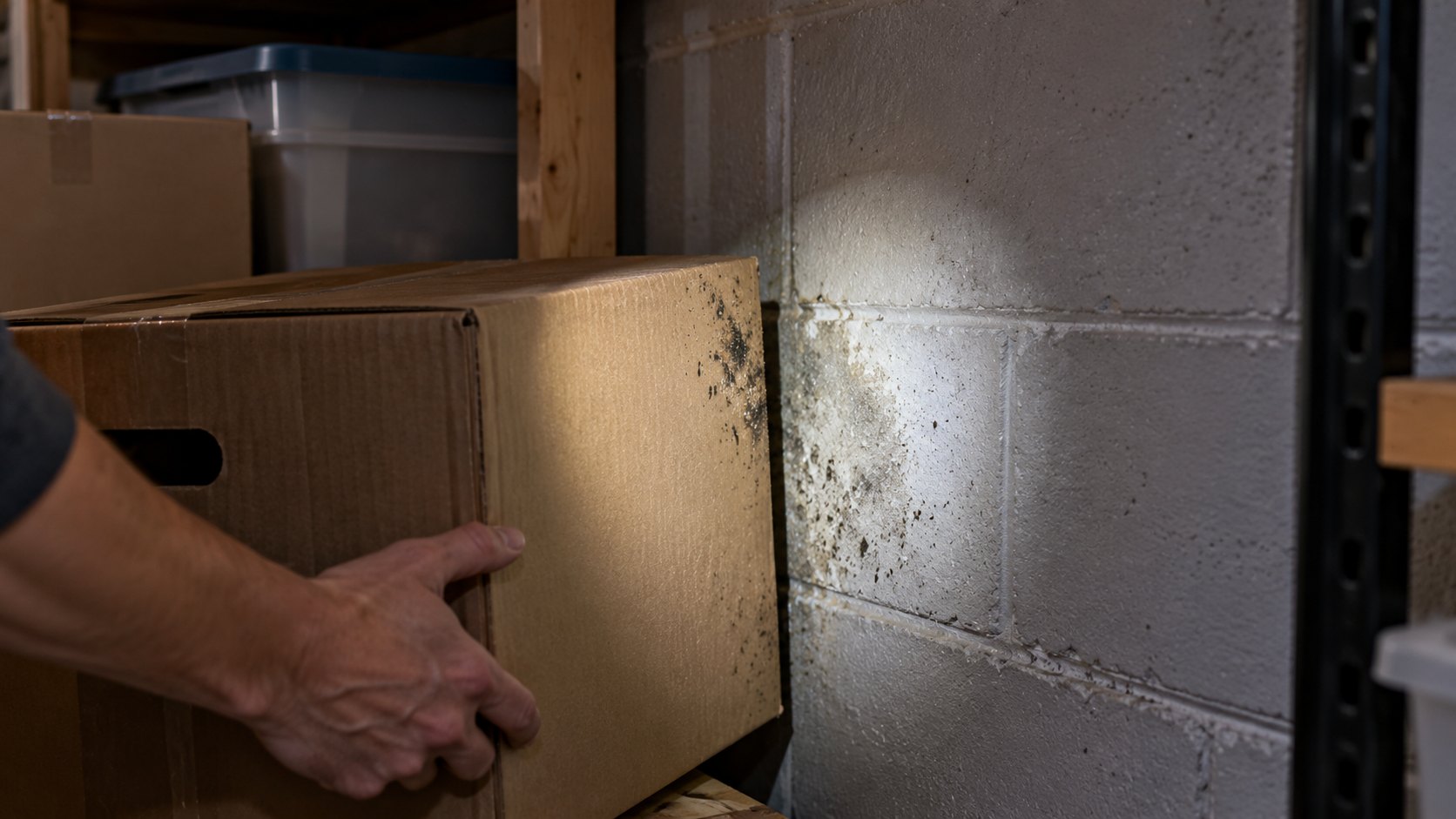
Start with your nose, then grab a flashlight. Common summer hot spots:
- Sweating cold-water pipes and ductwork, and the drywall or stored items right below them
- The rim joist, the wood framing that sits on top of the foundation wall. Our post on rim joist mold shows what to look for there.
- Behind boxes, furniture, and paneling pushed against exterior walls, where air doesn’t move
- Carpet and padding laid over concrete, especially near exterior walls
- Around the sump pit, water heater, and HVAC equipment
- Lower walls with a chalky white line, faint staining, or peeling paint
Early signs are subtle: small gray or green specks on the paper face of drywall, a faint fuzzy patch on the back of a box, or a light dusting on wood. Those are far easier to deal with than a whole wall.
Will opening the windows help?
Usually not in summer. It feels like fresh air should help, but bringing hot, humid outdoor air into a cool basement adds moisture, and that moisture condenses on the cool surfaces. On muggy July days, keeping basement windows closed and running a dehumidifier generally works better. Save the open windows for cooler, drier days.
How do I get rid of a musty basement smell?
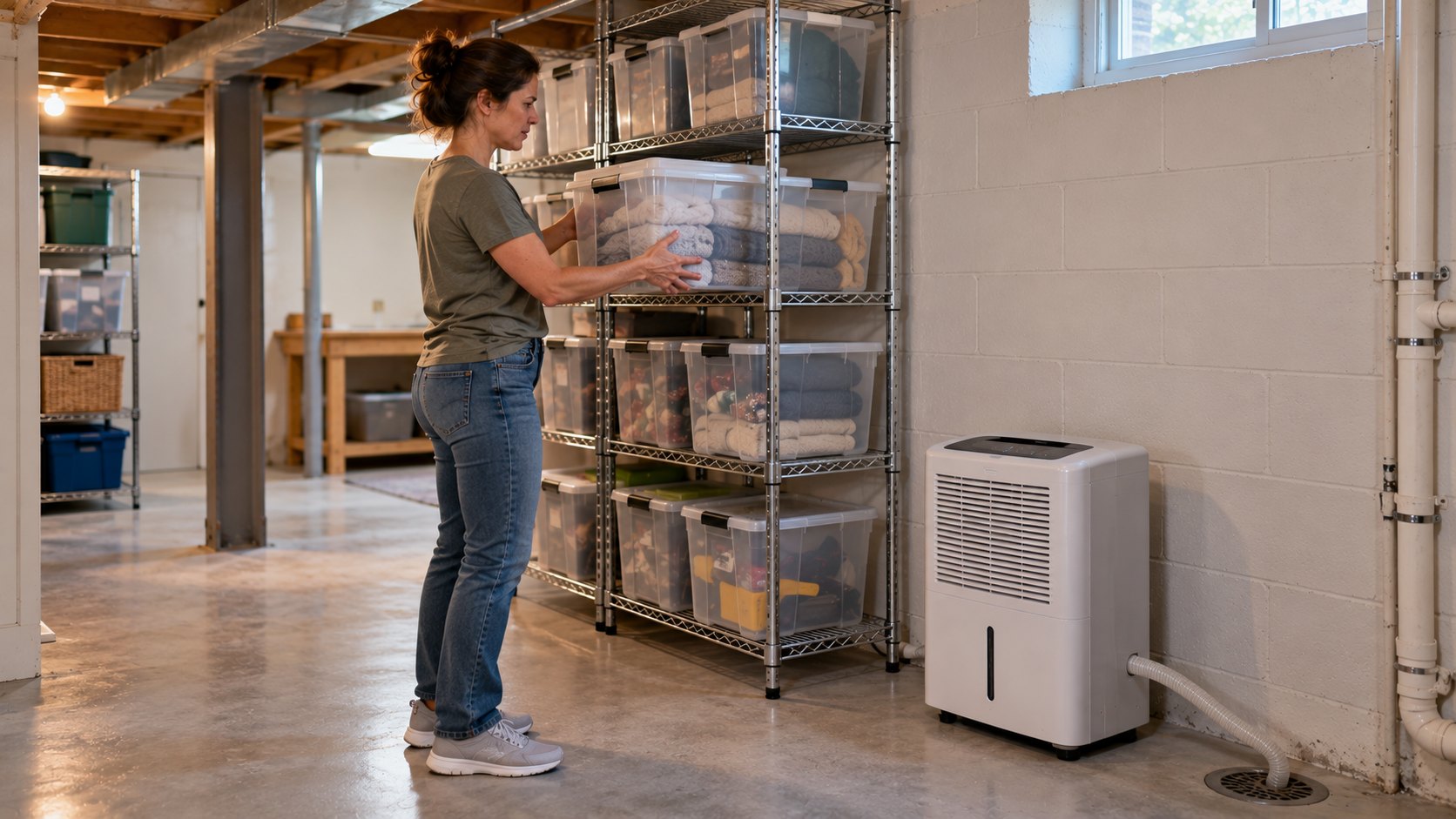
Air fresheners only cover it up. To get rid of the smell, you have to remove the moisture and deal with any growth:
- Measure the humidity. An inexpensive hygrometer from the hardware store tells you where you stand. The EPA’s guide to mold and moisture recommends keeping it between 30 and 50 percent.
- Run a properly sized dehumidifier, set to drain continuously into a floor drain or condensate pump so it doesn’t shut off when the bucket fills.
- Insulate cold-water pipes so they stop sweating.
- Get stored items off the floor and away from exterior walls. Swap cardboard boxes for plastic bins.
- Fix outside water sources. Keep gutters clean, extend downspouts, and make sure the soil slopes away from the foundation.
- Deal with existing mold the right way. Small spots on hard surfaces can often be cleaned, but anything larger, anything on drywall or insulation, or anything that keeps coming back should be looked at by a professional.
When should I call a professional?
Call in a mold professional if the smell sticks around after you’ve brought the humidity down, if you see growth larger than about 10 square feet (roughly a 3-by-3-foot patch, per EPA guidance), if mold is on drywall, insulation, or carpet, or if anyone in the home has allergies, asthma, or a weakened immune system. It’s also worth a call if you’re buying or selling a home and need clear documentation.
How Pro Home Restorations handles musty basements
Our IICRC-certified team finds where the moisture is coming from before anything gets torn out:
- Inspection and moisture mapping. We use moisture meters and a careful visual inspection to track down the source of the smell, including spots hidden behind walls and stored items.
- Containment and removal. We set up containment so spores don’t spread, then clean or remove affected materials.
- Drying and humidity control. We dry the area with commercial equipment and help you keep humidity where it belongs going forward.
- Repairs. Our property restoration team replaces drywall or anything else that had to come out.
Learn more about our Mold Testing & Remediation services. Our work comes with a 3-year transferable warranty, and inspections are always free.
What areas do you serve?
Pro Home Restorations serves Philadelphia and Delaware, Montgomery, Bucks, Chester, and Berks counties.
Basement smelling off?
Let us find the source before it spreads. Call (484) 948-7710, available 24/7, or request your free evaluation online.