
When the heat comes on and the windows close for the season, many homeowners in the Philadelphia suburbs notice something they missed all summer. It might be a gray patch on the bathroom ceiling, dark spots along a basement wall, or a musty corner behind the couch.
The tempting fix is a coat of stain-blocking primer and paint. It looks fine by the weekend. The trouble is that it rarely stays fine. So, can you paint over mold? You can, but it won’t fix the problem. Here’s why, and what to do instead.
Does painting over mold kill it?
No. Paint covers mold, but it doesn’t remove it, and it does nothing about the moisture that let it grow. Mold-resistant paints are made to help prevent new growth on a clean, dry surface. They aren’t a treatment for mold that’s already there.
The U.S. Environmental Protection Agency is direct about this: don’t paint or caulk moldy surfaces. Clean up the mold and dry the surface first, because paint applied over mold is likely to peel. (EPA: A Brief Guide to Mold, Moisture and Your Home)
What happens if you paint over mold?
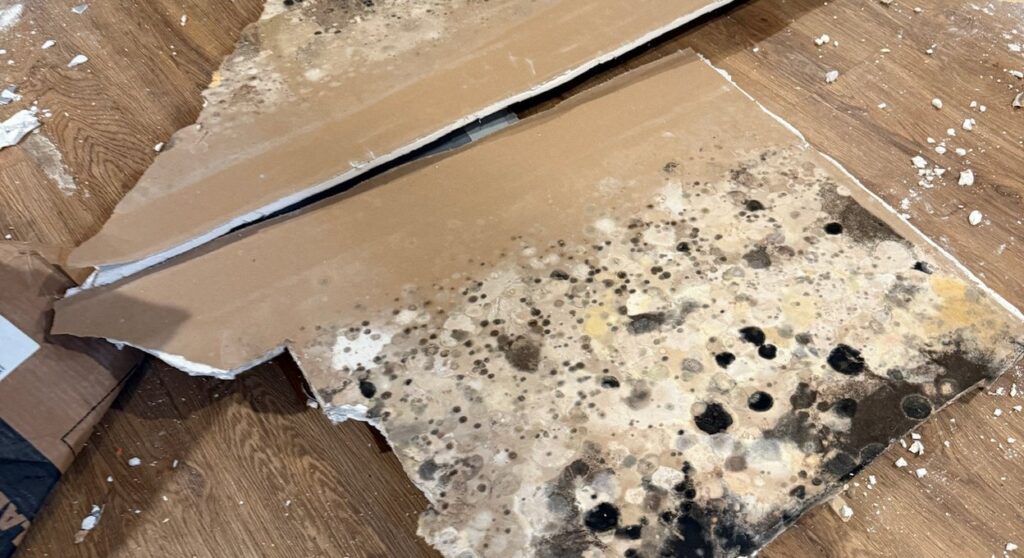
Mold needs moisture to grow. If the leak, condensation, or high humidity is still there, the mold keeps growing underneath the paint and into the drywall paper or wood behind it.
That’s why painted-over mold usually shows itself again in a few months:
- Paint that bubbles, blisters, or peels in one spot
- A stain that bleeds back through the new coat
- A musty smell that returns even though the wall looks clean
- Soft or crumbling drywall at the edges of the patch
Porous materials are the hardest to save. Drywall, ceiling tiles, and carpet can hold mold in spaces you can’t scrub, so they sometimes need to be cut out and replaced rather than cleaned.
Can you paint over mold with Kilz or a mold-killing primer?
Not directly. Even Kilz, which makes one of the best-known mold and mildew primers, says its primer is not meant to go directly on mold, and that painting over mold doesn’t kill it. These primers contain a mildewcide that prevents new growth on the primer itself.
Kilz’s own advice is to remove the mold first, or have a professional remove it, and make sure the surface is mold-free before priming. (Kilz: Can You Paint Over Mold?)
Can you paint over black mold?
No. The answer is the same whatever the color. Mold comes in many colors, including black and white, and the EPA’s advice covers all of it: clean up the mold and fix the water problem. Covering it with paint does neither.
Is painted-over mold still a problem if I can’t see it?
It can be. Mold produces allergens and irritants whether or not it’s visible. For people with allergies or asthma, that can mean sneezing, itchy eyes, or breathing trouble that seems to get worse indoors. The EPA also notes that dead mold can still cause allergic reactions, so the goal is always removal, not just covering or killing it.
There’s a property-value side, too. Hidden mold tends to come up at the worst time: during a home inspection, when you’re trying to sell.
Why does mold show up more in the fall?
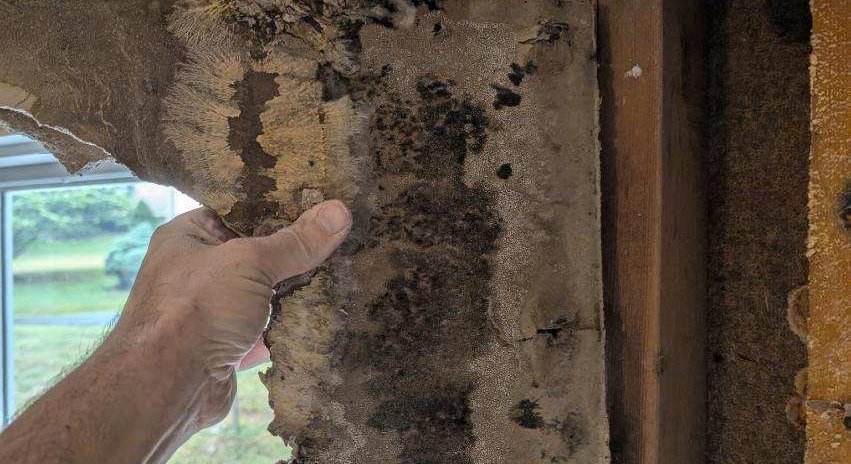
Fall changes how air and water move through your house.
- Windows close. Less fresh air means the moisture from showers, cooking, and laundry stays inside.
- Cold surfaces sweat. Warm indoor air meets cooler exterior walls, windows, and pipes, and condensation forms.
- Fall rain tests the outside. Clogged gutters and poor drainage push water toward the foundation. (See our post on fall gutter maintenance.)
The EPA recommends keeping indoor humidity below 60 percent, ideally between 30 and 50 percent. An inexpensive humidity meter from the hardware store will tell you where your basement stands.
What should I do instead of painting over mold?
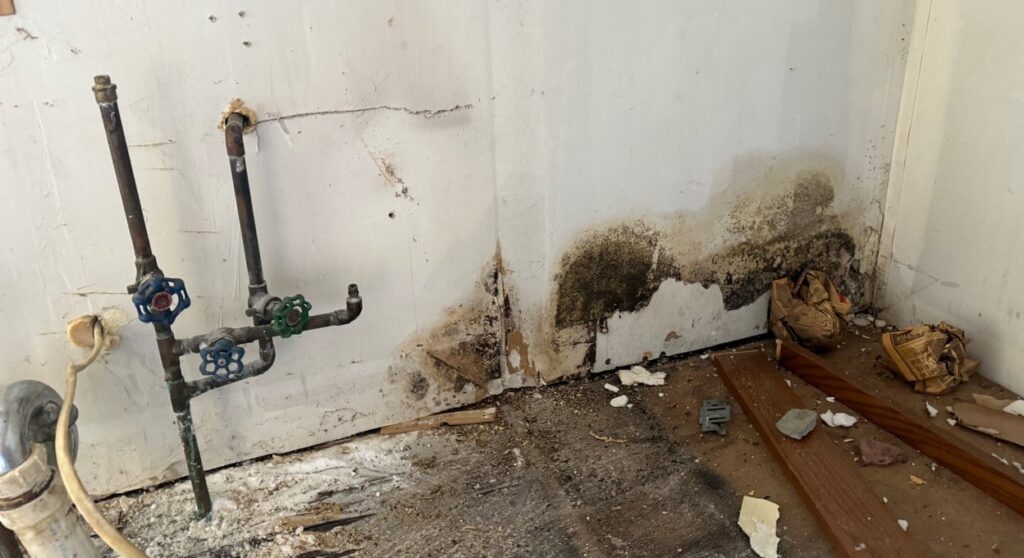
- Find and fix the moisture source first. Look for a plumbing leak, a gutter spilling against the wall, a bathroom without a working fan, or condensation on cold pipes. If the water keeps coming, the mold will too. Our post on the signs of hidden water damage can help you track it down.
- Size up the area. The EPA says a patch smaller than about 10 square feet (roughly 3 feet by 3 feet) is usually something a homeowner can handle. Scrub hard surfaces with detergent and water, wear gloves and an N-95 mask, and dry the area completely.
- Skip the bleach as a routine fix. The EPA doesn’t recommend bleach as a standard part of mold cleanup. And never mix bleach with ammonia-based cleaners.
- Paint only after the surface is clean and fully dry, and only once you’re sure the moisture problem is solved.
When should I call a professional?
Call for a professional evaluation if any of these are true:
- The mold covers more than about 10 square feet
- It came back after you cleaned or painted it
- It followed a flood, a burst pipe, or other major water damage. Mold can start growing within 24 to 48 hours, so call our 24/7 emergency response team right away.
- You smell mold but can’t find it, which often means it’s inside a wall, under flooring, or in the attic
- You suspect it’s in your heating and cooling system (don’t run the system until it’s checked)
- The water involved was sewage or other contaminated water
- Someone in the home has asthma, allergies, or a weakened immune system
What if the previous owner painted over mold?
Fresh paint in just one spot of a basement or bathroom, especially with a musty smell, is worth a closer look. If you’re buying or selling, it’s much easier to deal with it early than to have it surface during the inspection. Pro Home Restorations works with real estate agents, lenders, and property managers across the area and understands that a settlement date doesn’t wait. (More in our FAQs.)
How does Pro Home Restorations handle mold?
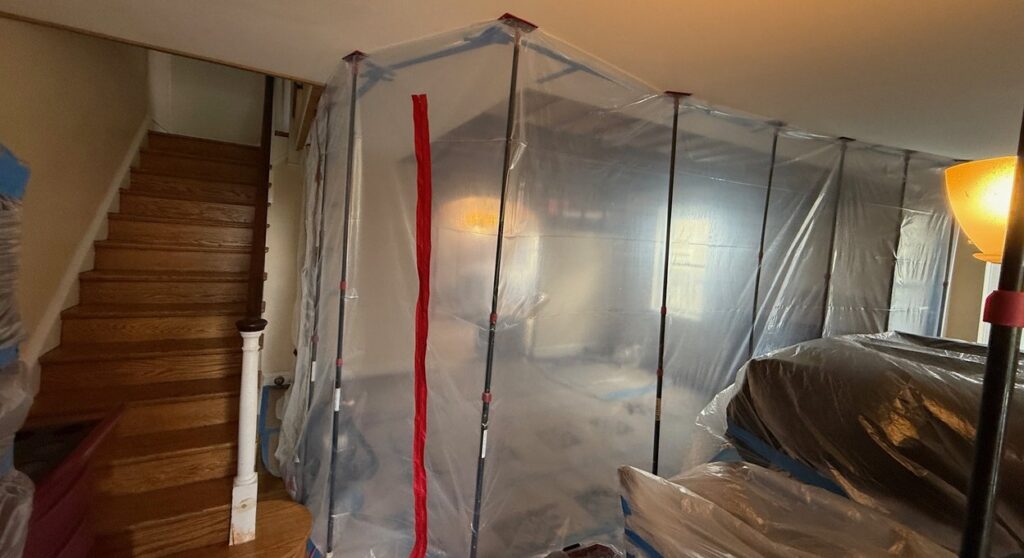
Our IICRC-certified team treats the cause, not just the stain:
- Inspection and moisture detection. We find where the water is coming from and how far the mold has spread, including behind walls.
- Containment and air filtration. Barriers and filtration keep spores from spreading to the rest of the house while we work.
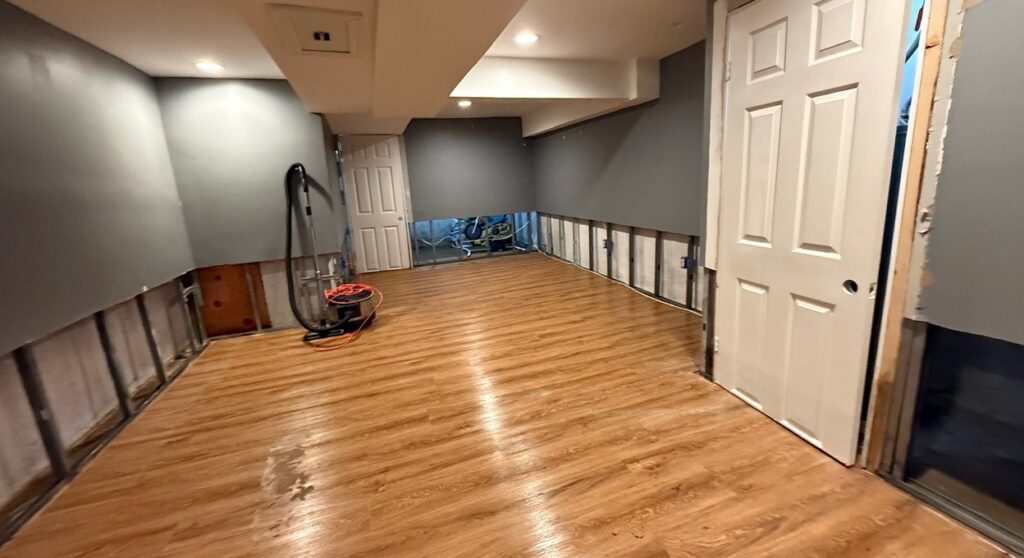
- Safe removal and treatment. Affected materials are removed or cleaned, and the area is dried properly. If drywall or flooring has to come out, our property restoration team puts it back.
- Prevention. We explain what caused it and what will keep it from coming back.
You can see a real project from start to finish in our case study, a Philadelphia home with roof leaks and mold that we restored in three days. Learn more about our Mold Testing & Remediation services.
What areas do you serve?
Pro Home Restorations serves Philadelphia and Delaware, Montgomery, Bucks, Chester, and Berks counties.
Thinking about painting over a spot?
Call us first. A free evaluation costs less than a second paint job, and a lot less than a wall that has to come out later. Call (484) 948-7710, available 24/7, or request your free evaluation online.