
On a cold morning in the Philadelphia suburbs, you may find water beading on the inside of your windows. A little moisture on the glass is easy to wipe away and forget, but it’s also information about the air in your home. Here’s what causes window condensation in winter, what it can tell you, and when it’s worth taking a closer look.
Why do my windows have condensation in winter?
Condensation forms on the inside of a window when the surface of the glass is colder than the dew point of the air in the room. Warm, humid indoor air cools when it touches the cold glass, and the moisture in it turns into water droplets. In winter, windows are often the coldest surfaces in a room, and the colder it gets outside, the more likely condensation becomes.
Is window condensation a sign of a problem?
It’s a sign of high indoor humidity. The EPA says condensation can be a sign of high humidity, and the University of Minnesota Extension lists window condensation among the symptoms of excess moisture in a home, along with mildew, mold, and peeling paint.
Occasional condensation on a very cold day isn’t necessarily cause for concern. Condensation that shows up regularly is worth paying attention to, because the moisture behind it doesn’t only collect on the glass.
What humidity level should my home be in winter?
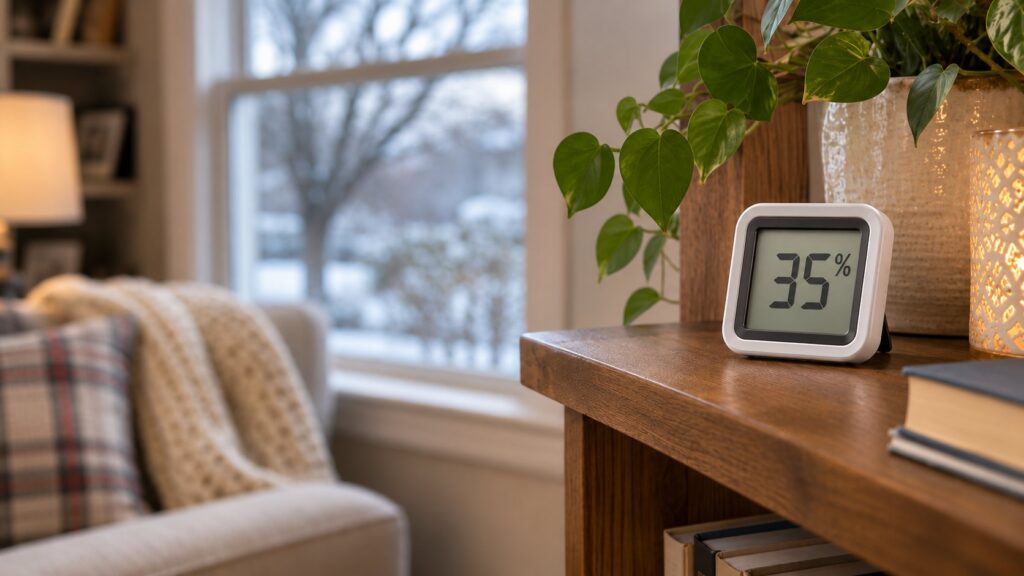
The EPA recommends keeping indoor relative humidity below 60 percent, and ideally between 30 and 50 percent. In cold weather, lower humidity may be needed to prevent condensation. The University of Minnesota Extension notes that moisture problems may occur when relative humidity is above 50 percent, and that keeping it around 25 percent in winter to 50 percent in summer is generally considered healthy and comfortable.
A hygrometer, a small device that measures humidity, can show you where your home stands.
When should I check for mold around my windows?
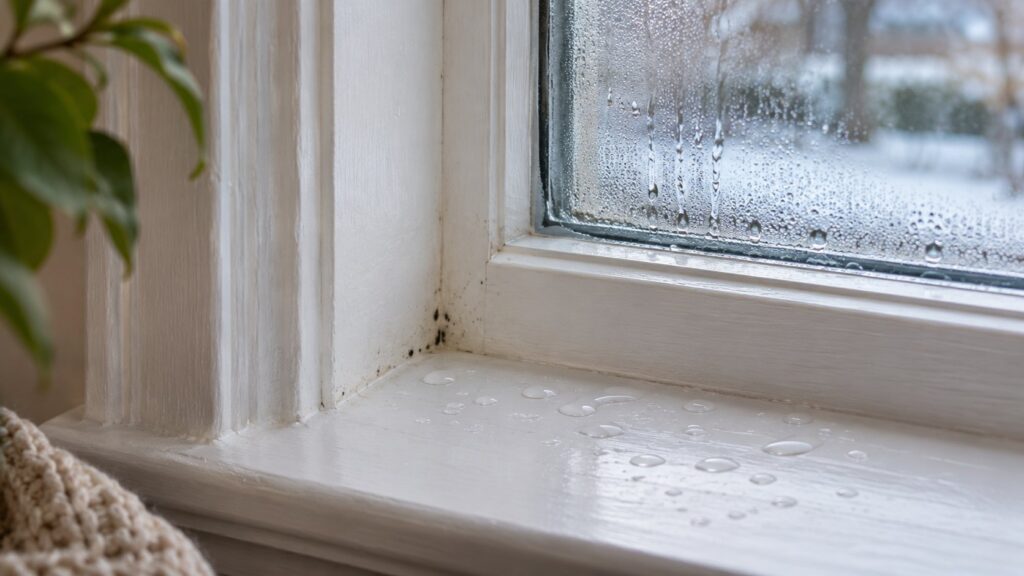
If you see condensation collecting on windows, walls, or pipes, the EPA advises acting quickly to dry the wet surface and reduce the source of the moisture. According to the EPA, if wet areas are dried within 24 to 48 hours, in most cases mold will not grow.
If condensation has been collecting for a while, look at the window sills, the frames, and the wall below the window for:
- Dark spots or discoloration
- Peeling or bubbling paint
- A musty smell, which the EPA says can point to hidden mold even when you can’t see it
How can I reduce window condensation?
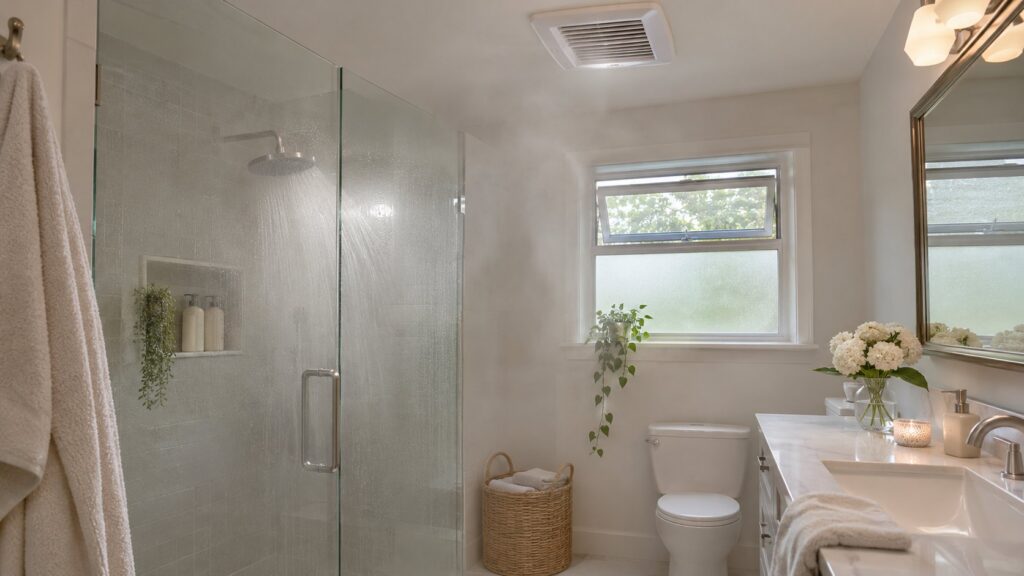
Lowering indoor humidity is the key. Recommendations from the EPA and the University of Minnesota Extension include:
- Run the bathroom fan or open a window when showering.
- Use exhaust fans when cooking or running the dishwasher.
- Vent clothes dryers and other moisture-producing appliances to the outside where possible.
- Cut back on sources of moisture, including humidifiers.
- Make sure your exhaust fans are working properly.
- In winter, briefly open windows a little to let warm, moist air out and cold, dry air in.
You can read more in the EPA’s Brief Guide to Mold, Moisture, and Your Home and the University of Minnesota Extension’s guide to controlling moisture problems in your home.
How Pro Home Restorations handles mold
If you’re seeing signs of mold around your windows, our IICRC-certified team can help:
- We inspect for free and give you an estimate.
- We test to confirm what’s there.
- We contain the area so mold isn’t spread through the rest of your home.
- We remove the mold safely, backed by our 3-year transferable warranty.
Learn more about our mold testing and remediation services, or read how quickly mold can grow after water damage.
What areas do you serve?
We serve Philadelphia and Delaware, Montgomery, Bucks, Chester, and Berks counties.
Spotted mold on a window frame?
Call us 24/7 at (484) 948-7710 or contact us online for a free inspection.