
Summer is when a lot of families in the Philadelphia suburbs finally get away: a week at the shore, a long weekend in the Poconos, a trip to see family. It’s also when we get some of our most frustrating calls. A supply line let go on day two, a thunderstorm knocked out the power and the sump pump with it, and nobody found the water until they pulled back into the driveway.
Water damage doesn’t care whether you’re home, but it does get worse the longer nobody notices it. A leak caught in an hour is a cleanup. A leak that runs for a week can soak flooring, drywall, and framing, and give mold plenty of time to start. Here’s how to set your house up before you leave so the trip stays the best part of your summer.
Why is water damage worse when you’re away?
Most household leaks start small. When you’re home, you hear the drip, smell the dampness, or spot a puddle and deal with it. When the house is empty, that same leak keeps going. Water spreads under flooring, wicks up drywall, and soaks into subfloors and insulation. Mold can start growing on wet materials within 24 to 48 hours, so a slow leak that runs for seven days can turn a simple repair into a much larger restoration project.
Summer adds its own risks: sudden thunderstorms, power outages that stop sump pumps, and air conditioners that can overflow their drain pans while no one is watching.
Should I turn off the main water valve before vacation?
For most trips longer than a couple of days, yes. Shutting off the main water valve is the single most effective step you can take, because nothing can leak if nothing is flowing. Find the valve before you need it. In many local homes it’s in the basement on the front wall, near where the water line comes in. Turn it off, then open a faucet on the lowest floor to relieve pressure and confirm the water is actually off.
A few things to think about first:
- If you have an irrigation system or a house sitter watering plants, plan around the shutoff or have them turn the water on only while they’re there.
- Well systems and some boilers have their own considerations. If you aren’t sure, ask your plumber before you shut anything off.
- Set your water heater to “vacation” mode if it has one. It saves energy and keeps the tank from cycling while you’re gone.
What should I check before I leave?
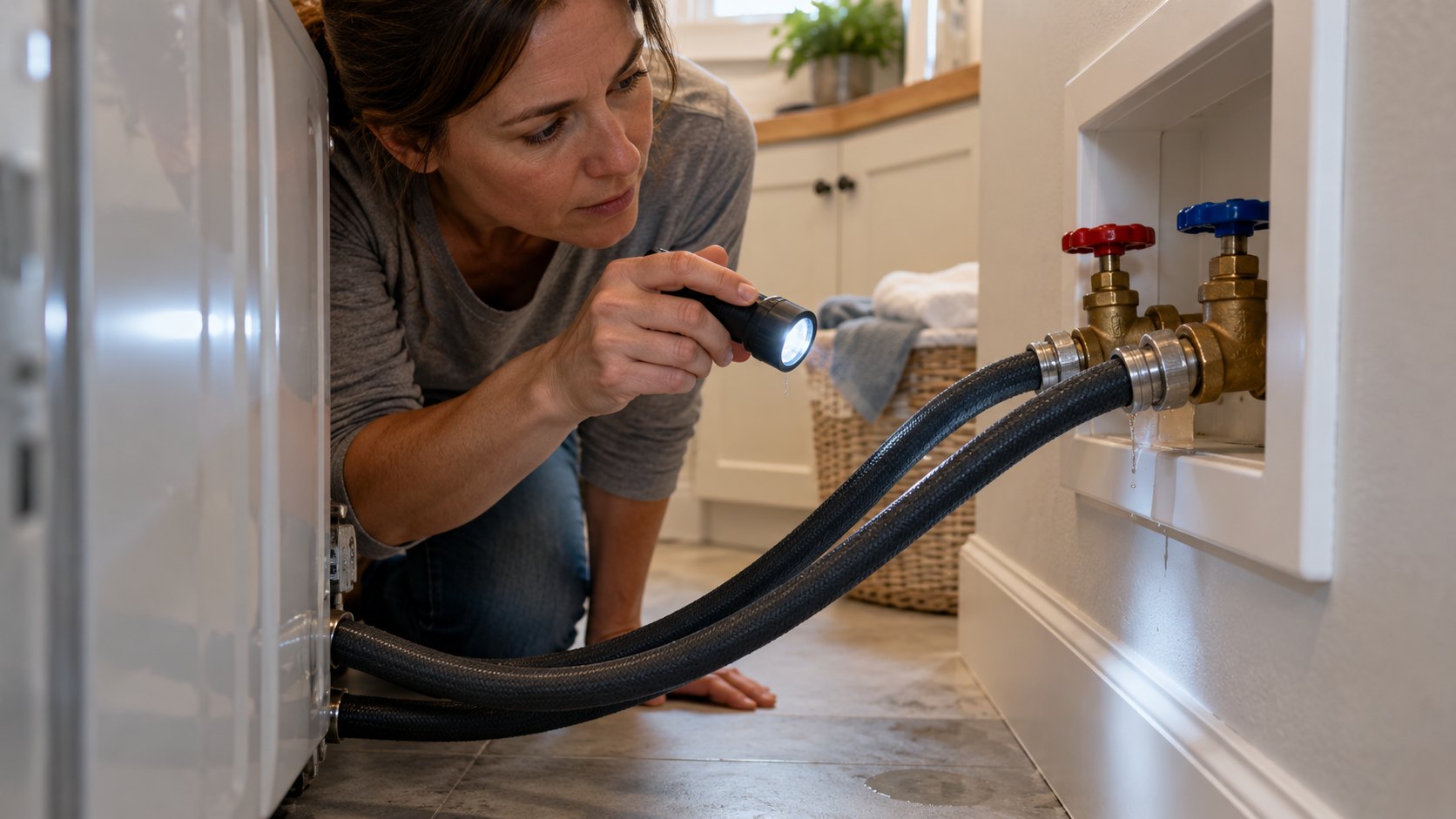
Spend 20 minutes on a walk-through the day before you go:
- Washing machine hoses. Rubber hoses crack with age. If yours are bulging or more than five years old, replace them with braided stainless steel lines.
- Toilet and sink supply lines. Look under each sink and behind each toilet for drips, corrosion, or a damp cabinet floor.
- Water heater. Check the base for rust or moisture. A tank that’s starting to weep can fail completely.
- Refrigerator and ice maker line. Pull the fridge out if you can and look at the floor behind it.
- Gutters and downspouts. A summer downpour with clogged gutters sends water straight down the foundation. Make sure downspouts are clear and pointed away from the house. Our team offers gutter cleaning if you’d rather not climb the ladder.
How do I make sure my sump pump works while I’m gone?
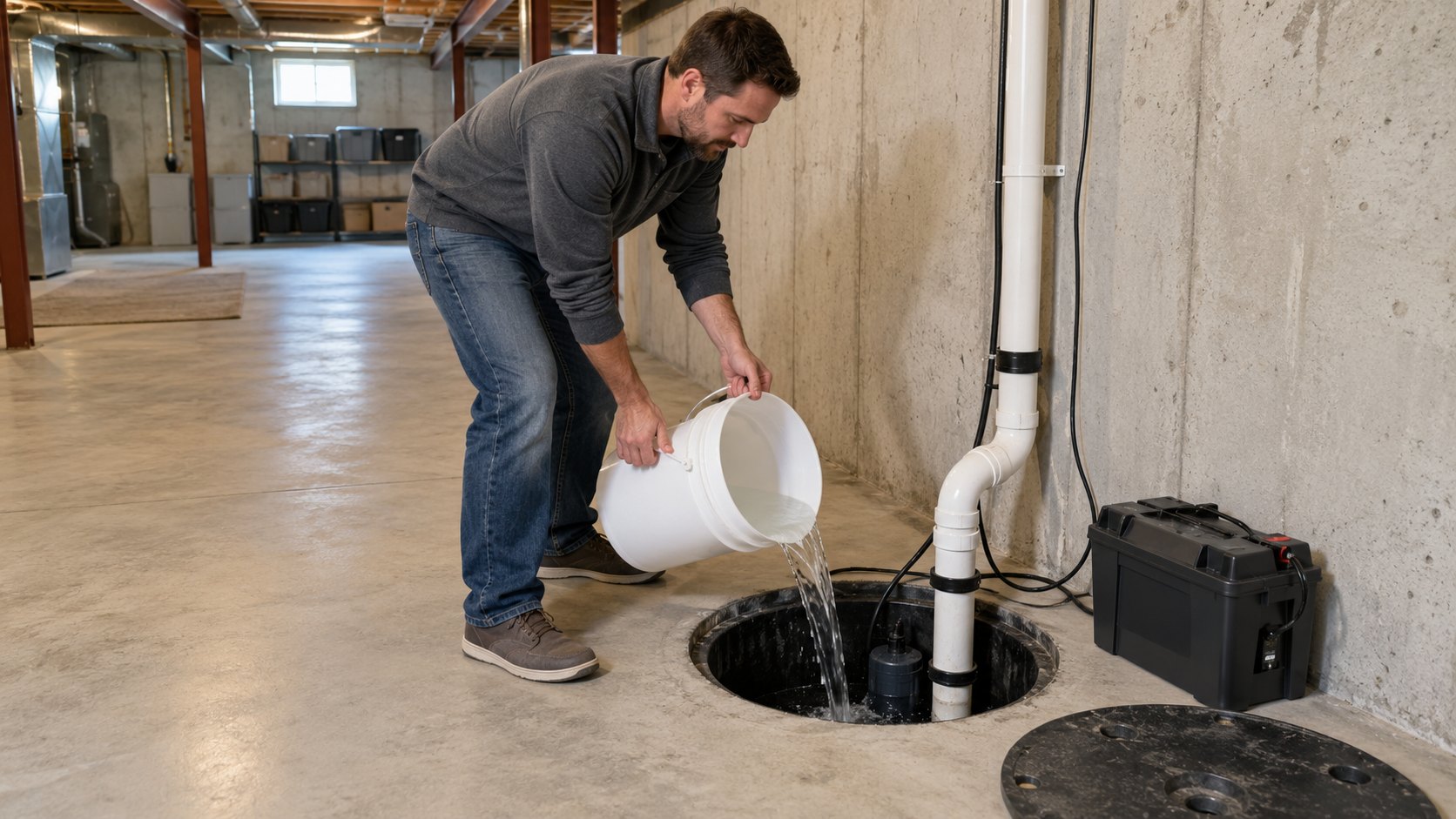
Summer thunderstorms in southeastern Pennsylvania can drop a lot of rain fast, and they often knock out power at the same time. If your basement has a sump pump, test it before you leave: pour a bucket of water into the pit and make sure the pump kicks on, empties it, and shuts off.
If the pump is older or you don’t have a battery backup, consider adding one. A primary pump can’t do anything during a power outage, and an empty house means nobody is there to notice. Check that the discharge line outside isn’t blocked or crushed so the water actually leaves.
Should I leave the air conditioning on?
Yes, at a moderate setting. Turning the AC off completely during a humid Pennsylvania July lets moisture build up inside the house, especially in the basement, and that’s exactly the condition mold likes. Setting the thermostat a few degrees higher than usual keeps humidity in check without cooling an empty house. If you run a basement dehumidifier, make sure it drains to a floor drain or condensate pump rather than a bucket that will fill up on day one.
Before you leave, also check that the AC’s condensate drain line is flowing and the drip pan under the indoor unit is dry. A clogged line is one of the most common summer leaks we see.
Is a water leak sensor worth it?
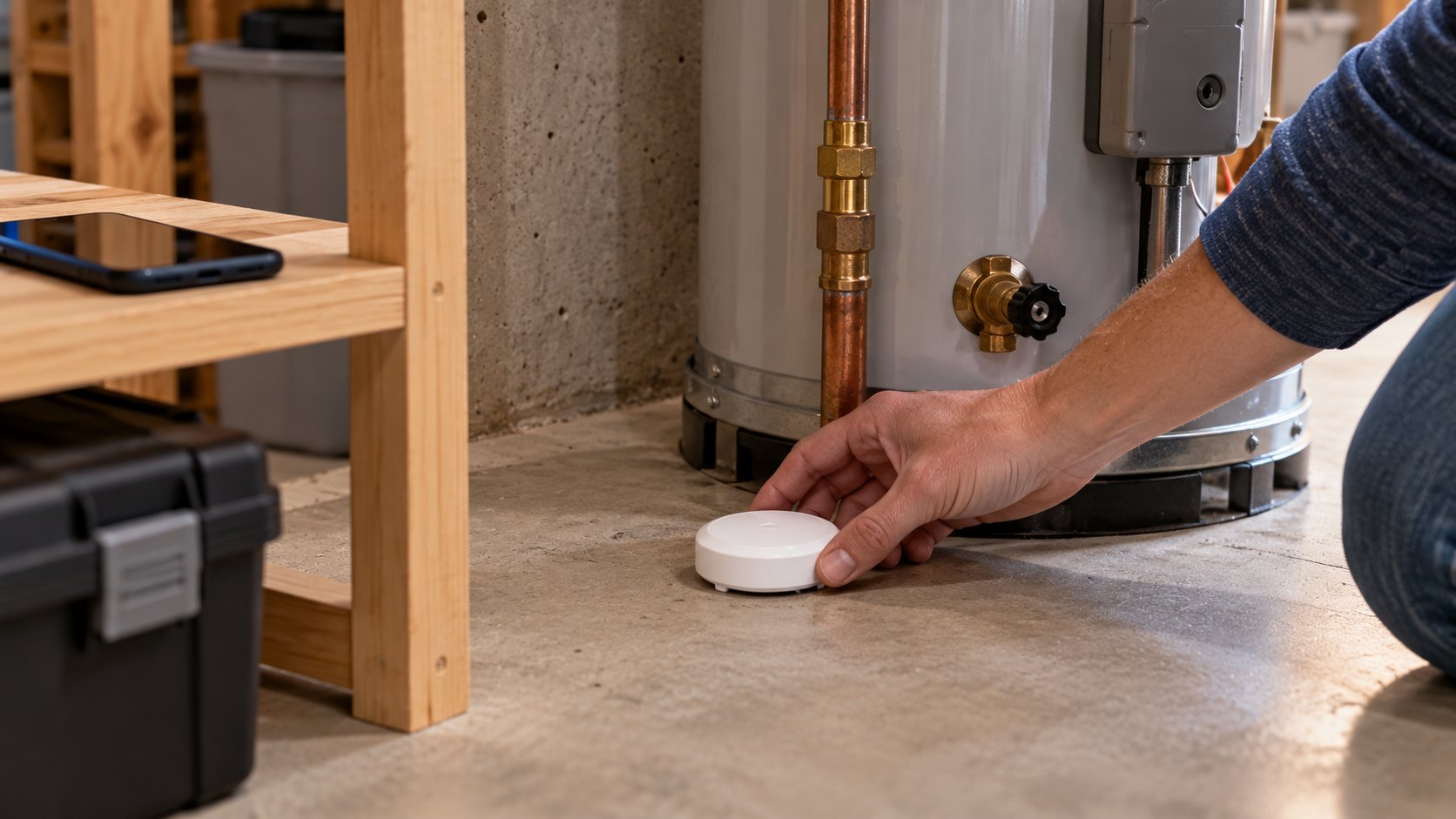
For an empty house, water leak sensors are one of the best inexpensive tools available. Place them under the water heater, near the washing machine, under the kitchen sink, beside the sump pit, and under the indoor AC unit. Smart sensors send an alert to your phone the moment they get wet. Some homeowners go further and install an automatic shutoff valve that closes the main line when a leak is detected.
Just as important: give a trusted neighbor or friend a key and ask them to walk through the house every few days, basement included. A quick look can catch a problem days before you would.
What if I come home to water damage?
First, stay safe. If water is near outlets, appliances, or the electrical panel, don’t walk through it, and only shut off power at the breaker if you can reach it from a dry spot. Then:
- Shut off the main water valve if a leak is still running.
- Take photos and video of everything before you move or throw anything away.
- Call your insurance company to report the loss. Coverage depends on your policy and the cause, so ask what’s covered before assuming anything.
- Call a water damage restoration company quickly. The sooner drying starts, the less likely mold is to follow.
How Pro Home Restorations handles water damage
Our IICRC-certified team responds 24/7, even if you’re still unpacking the car:
- Inspection and moisture mapping. We use moisture meters to find how far the water traveled under floors and up walls, not just where it’s visible.
- Water extraction and drying. We remove standing water, take out materials that can’t be saved, and dry the structure with commercial air movers and dehumidifiers until the readings confirm it’s truly dry.
- Mold remediation, if growth has already started. Learn more about our Mold Testing & Remediation services.
- Repairs. Our property restoration team puts the room back together.
We document everything for your claim and work with your adjuster. See our water damage restoration services for more. Our work comes with a 3-year transferable warranty, and inspections are always free.
What areas do you serve?
Pro Home Restorations serves Philadelphia and Delaware, Montgomery, Bucks, Chester, and Berks counties.
Came home to a wet floor?
Let us take a look before it spreads. Call (484) 948-7710, available 24/7, or request your free evaluation online.