
On a humid July afternoon in the Philadelphia suburbs, your central air can pull gallons of water out of the air in a single day. That’s normal; it’s part of how air conditioning works. The trouble starts when that water doesn’t go where it’s supposed to. A small tan ring on the ceiling under the attic air handler, a damp spot on the carpet by the furnace, or a puddle in the utility room is usually the first sign.
Here’s why air conditioners leak, what to do the moment you notice it, and how to keep a small drip from turning into ceiling damage or mold.
Why is my air conditioner leaking water?
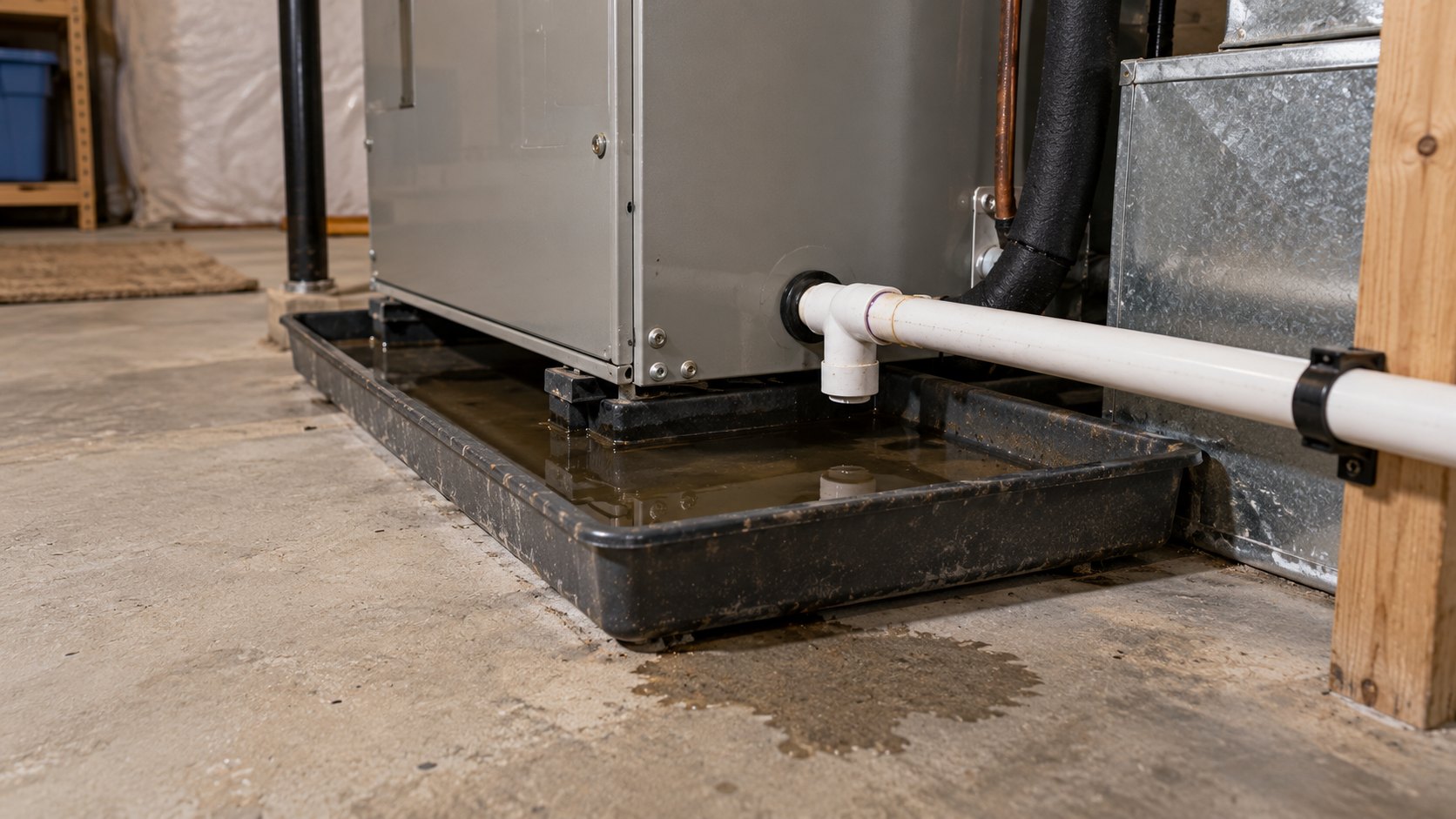
As warm, humid air passes over your AC’s cold evaporator coil, moisture condenses on the coil, the same way water beads on a glass of iced tea. That water drips into a drain pan and flows out through a condensate drain line, usually to a floor drain, a small condensate pump, or outside.
When something interrupts that path, water ends up where it shouldn’t. The most common causes we see:
- A clogged condensate drain line. Algae, sludge, and dust build up inside the line over the summer until water backs up and spills over the pan.
- A rusted or cracked drain pan. Older metal pans corrode and leak slowly, often for weeks before anyone notices.
- A failed condensate pump. Where water can’t drain by gravity, a small pump moves it out. When the pump quits, the reservoir overflows.
- A frozen evaporator coil. A dirty filter or poor airflow can let the coil ice over. When it thaws, more water melts off than the pan can handle.
- A loose or poorly sloped drain line. Lines can sag or come apart, especially in attics.
Where does AC water damage show up?
That depends on where your equipment lives. In many homes around here, the air handler sits in the attic, so a leak shows up as a stain on the ceiling below, often in a hallway or upstairs bedroom. If your system is in the basement or a first-floor closet, look for damp carpet, swelling baseboards, or water around the base of the unit.
The early signs are easy to dismiss: a faint yellow or tan ring on the ceiling, paint that’s just starting to bubble, a musty smell when the system kicks on, or a drip line running down the side of the cabinet. Catching it at this stage keeps the fix small.
What should I do if my AC is leaking?
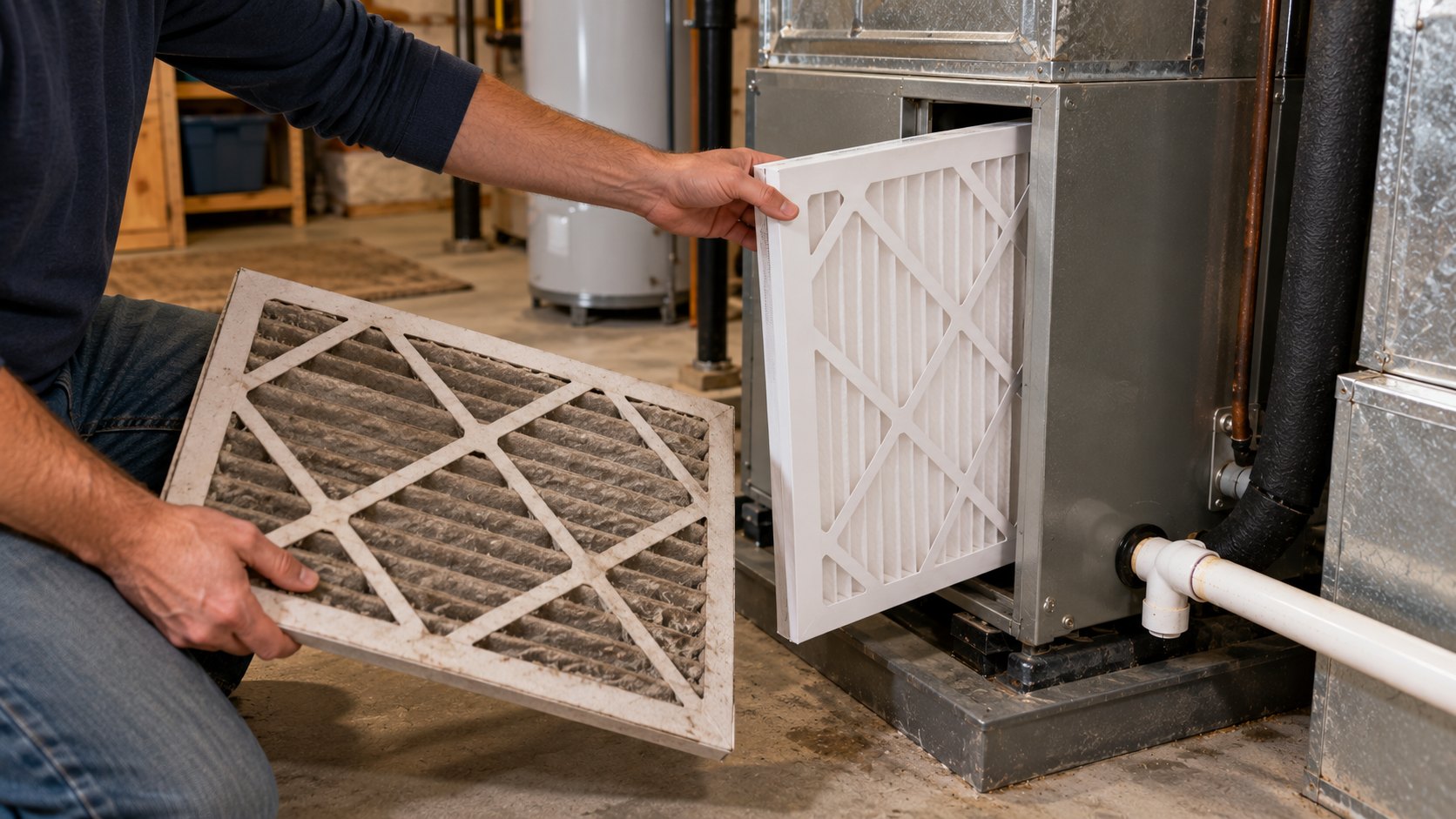
- Turn the system off at the thermostat so it stops producing condensation.
- Check the drain pan. If it’s full, carefully remove the water with a wet/dry vacuum or towels.
- Check the filter. A clogged filter can freeze the coil. Replace it if it’s dirty.
- Find the condensate line’s cleanout, often a capped T-shaped fitting near the unit. Many homeowners can clear a minor clog, but if you’re not comfortable working around the equipment, leave it to a pro.
- Call an HVAC technician to repair the unit itself: the pan, pump, coil, or any refrigerant issue.
- Look past the unit. Check the ceiling, walls, and floor around and below the equipment for stains, soft spots, or damp insulation.
The HVAC technician fixes the source. If water has already soaked into drywall, insulation, or flooring, that’s a separate job, and it’s the part that leads to mold if it isn’t dried properly.
Can a leaking AC cause mold?
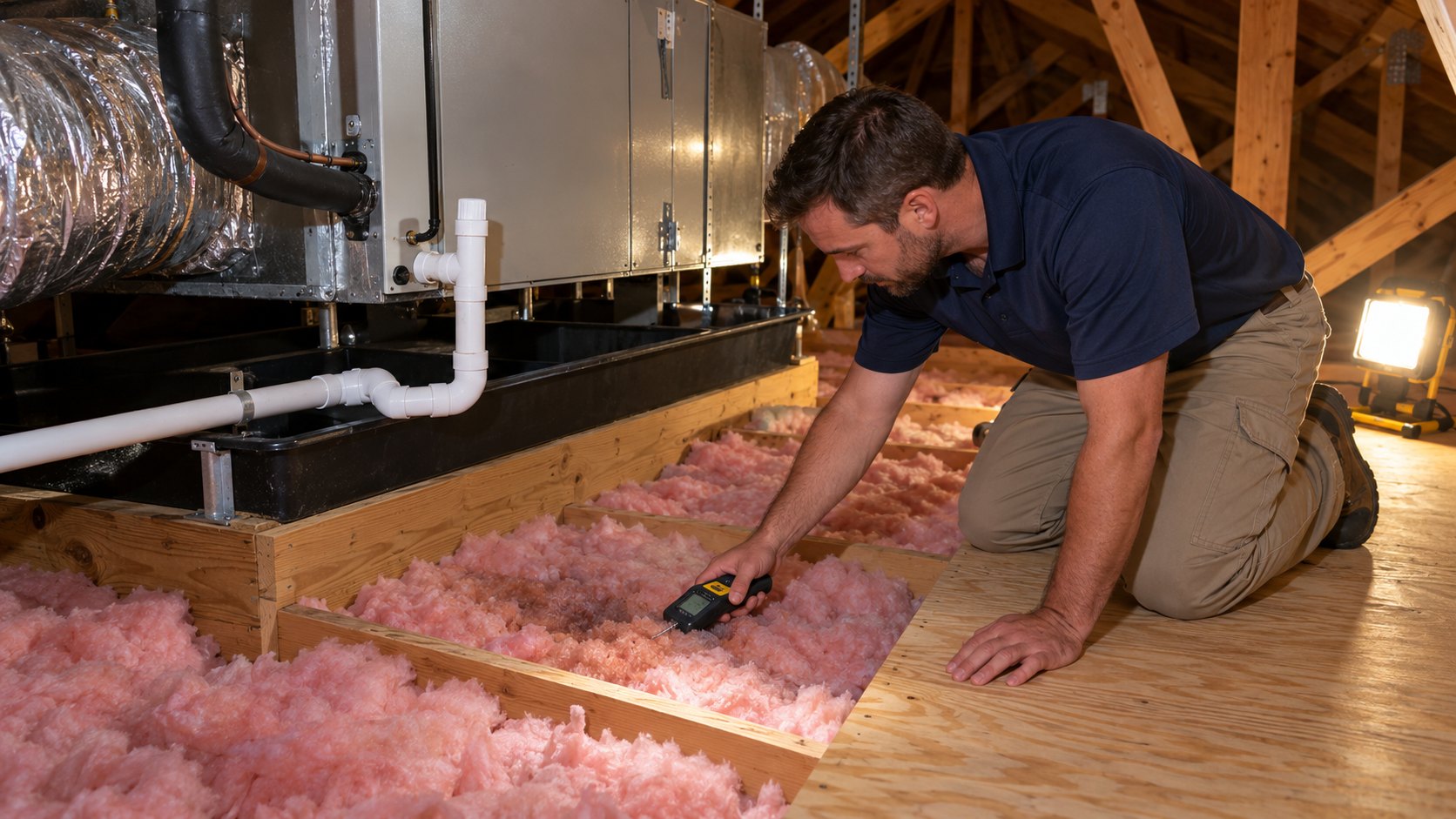
Yes. AC leaks are a classic setup for mold because they’re slow, they often happen in places you don’t look (attics, utility closets, inside ceilings), and summer humidity keeps everything damp. Mold can begin growing on wet drywall or insulation within 24 to 48 hours. Wet attic insulation is especially easy to miss: it holds water against the ceiling drywall and can stay damp long after the leak stops.
If you see staining, or smell something musty when the system runs, don’t just paint over it. Our post on painting over mold explains why it comes back.
How do I keep my AC from leaking?
- Change your filter every one to three months during cooling season.
- Have the system serviced each spring, including the coil, drain pan, and condensate line.
- Keep the condensate line clear. Ask your HVAC technician how to flush it safely for your system, and do it once or twice a summer.
- Add a float switch or water sensor at the pan. A float switch shuts the system off before the pan overflows.
- Keep airflow healthy. Restricted airflow is a common cause of frozen coils. Our team offers air duct cleaning and HVAC assessments.
Does homeowners insurance cover AC leak damage?
It depends on your policy and the cause. Many policies cover sudden, accidental water damage but exclude damage from long-term leaks, wear and tear, or lack of maintenance, and repairing the AC unit itself is usually not covered. If you find damage, photograph it and call your insurer to ask how your policy applies. Our insurance page explains how we work with adjusters.
How Pro Home Restorations handles AC leak water damage
Our IICRC-certified team takes care of the damage once water has gotten into your home:
- Inspection and moisture mapping. We use moisture meters to find how far the water spread through the ceiling, walls, attic insulation, and floors.
- Removal and drying. We remove wet insulation and materials that can’t be saved, then dry the structure with commercial equipment and check readings until it’s truly dry.
- Mold remediation, if growth has already started. Learn more about our Mold Testing & Remediation services.
- Repairs. Our property restoration team replaces drywall and puts the room back together.
See our water damage restoration services for more. Our work comes with a 3-year transferable warranty, and inspections are always free.
What areas do you serve?
Pro Home Restorations serves Philadelphia and Delaware, Montgomery, Bucks, Chester, and Berks counties.
Spotted a stain under the AC?
Let us take a look before it spreads. Call (484) 948-7710, available 24/7, or request your free evaluation online.